




What's Happening?
Prop stylist and interior decorator Erik Kenneth Staalberg, along with his partner Robert Harter, has opened their 1930s rental apartment in Glendale's Rossmoyne historical neighborhood for a tour. The 1400-square-foot, two-bedroom space is a master class
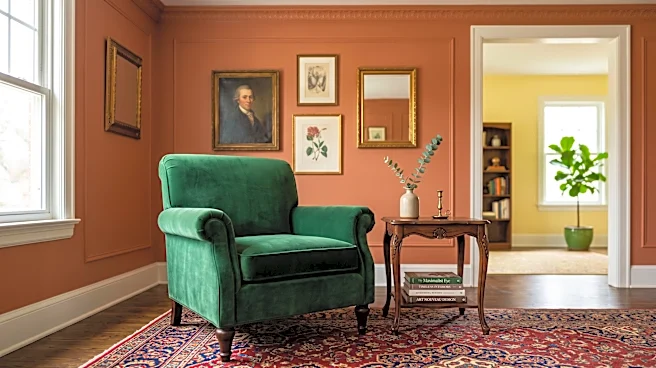
in blending vintage finds, vibrant colors, and a collected style. Staalberg was particularly drawn to the apartment's intact original architectural details. The current aesthetic, described as glam, maximalist, and traditional, is a significant transformation from its previous gothic decor, which featured dark colors and limited lighting. The apartment now boasts warm, earthy tones, with rooms painted in shades like Valspar's 'Naked Clay' and Sherwin-Williams' 'Lemon Meringue,' complemented by a mix of furniture from various sources, including West Elm, Anthropologie, and vintage pieces.
Why It's Important?
This feature on Erik Kenneth Staalberg's Glendale rental is important as it showcases a significant trend in U.S. interior design: the appreciation and integration of historical architecture with contemporary and vintage elements. It highlights how individuals are personalizing rental spaces, often constrained by existing structures, to reflect unique styles. The emphasis on mixing vintage finds with modern pieces from retailers like West Elm and Anthropologie demonstrates a consumer preference for curated, eclectic interiors over mass-produced uniformity. This approach can inspire homeowners and renters alike to explore creative ways to decorate their living spaces, promoting sustainability through the reuse of vintage items and encouraging personal expression through color and texture. The transformation from a 'gothic' aesthetic to a 'glam, maximalist, traditional' style also reflects evolving design sensibilities and the impact of personal taste on living environments.
What's Next?
Following the publication of this apartment tour, it is likely to inspire a broader audience of interior design enthusiasts, renters, and homeowners to experiment with similar design principles. We might see an increased interest in vintage furniture and decor, as well as a greater willingness to incorporate bold colors into living spaces. Design blogs and social media platforms may feature more examples of 'maximalist' and 'collected' styles, further popularizing these trends. Retailers specializing in vintage items or those offering customizable furniture options could experience a boost in demand. Additionally, the feature could encourage more individuals to share their unique home decor journeys, fostering a community around personalized interior design. The ongoing dialogue about transforming rental properties will likely continue, with a focus on innovative and reversible design solutions.
Beyond the Headlines
Beyond its aesthetic appeal, Erik Kenneth Staalberg's apartment tour touches upon deeper cultural and social aspects of home and personal identity. The transformation of the space from a dark, gothic style to a vibrant, eclectic one reflects a journey of personal expression and the creation of a shared home with his partner, Robert Harter. This process of blending individual tastes and compromising on design choices, as mentioned by Staalberg, highlights the collaborative nature of creating a home. The appreciation for intact 1930s architectural details also speaks to a growing reverence for historical preservation within residential contexts, contrasting with trends of rapid modernization. The 'collected style' itself suggests a narrative of personal history, travel, and curated experiences, where each item tells a story. This approach to interior design transcends mere decoration, becoming a reflection of one's life, values, and relationships, and offering a sense of rootedness and individuality in an increasingly transient world.