





What's Happening?
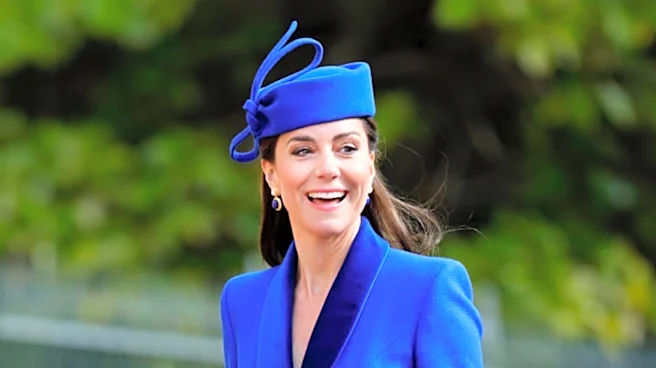
Kate Middleton, the Princess of Wales, recently discussed her approach to raising her three children—Prince George, Princess Charlotte, and Prince Louis—highlighting the importance of nature in their development. In an interview with Country Life magazine,
she shared her own childhood experiences of spending time outdoors and the sense of freedom it provided. The Princess noted that children often observe details in nature that adults tend to overlook, such as changing light or the sound of water. She stated that she constantly reminds herself to allow her children the freedom to explore nature rather than directing their observations. Additionally, Kate Middleton spoke about how spending time outdoors played a significant role in her recovery journey after her cancer diagnosis, describing nature as a sanctuary that offers a unique connection to mind, body, and spirit without judgment or expectation.
Why It's Important?
Kate Middleton's emphasis on nature's role in child development and personal well-being carries significant weight, given her public platform. Her advocacy can encourage parents to prioritize outdoor experiences for their children, potentially fostering a generation with a deeper connection to the environment and improved mental and physical health. This perspective aligns with growing research on the benefits of nature exposure, including reduced stress, enhanced cognitive function, and increased creativity. Furthermore, her personal testimony about nature aiding her cancer recovery highlights the therapeutic potential of the outdoors, offering a relatable and powerful message of hope and healing. This could inspire individuals facing health challenges to seek solace and recovery in natural environments, promoting a holistic approach to health that extends beyond conventional medical treatments. Her statements reinforce the idea that simple, accessible activities like spending time in nature can have profound impacts on overall well-being.
What's Next?
The Princess of Wales's public statements on the importance of nature for children and personal recovery may inspire broader initiatives focused on outdoor education and nature-based therapies. We might see increased public awareness campaigns promoting time outdoors for families, potentially leading to more resources allocated to parks, green spaces, and nature-based programs in schools and communities. Her continued advocacy could also influence healthcare discussions, encouraging the integration of nature-based interventions as complementary therapies for various conditions, including mental health challenges and chronic illnesses. Organizations dedicated to environmental conservation and child development may leverage her message to gain further support and funding. Additionally, her personal sharing could encourage more public figures to speak about their own experiences with nature as a healing tool, further normalizing and promoting its benefits across society.
Beyond the Headlines
Kate Middleton's reflections on nature delve into deeper philosophical and cultural implications regarding humanity's relationship with the natural world. Her emphasis on allowing children to explore freely, rather than dictating their experiences, touches upon pedagogical theories that advocate for child-led learning and the development of intrinsic curiosity. This approach contrasts with increasingly structured and screen-dominated childhoods, prompting a re-evaluation of modern parenting practices. Furthermore, her description of nature as a non-judgmental sanctuary speaks to a universal human need for solace and authenticity, particularly in times of vulnerability like illness. This narrative subtly critiques the pressures of performance and societal expectations, suggesting that nature offers a space for genuine self-acceptance. Culturally, it reinforces a romanticized view of nature as a source of purity and healing, a theme prevalent in literature and art, and encourages a return to simpler, more grounded ways of living amidst technological advancement.