








What's Happening?
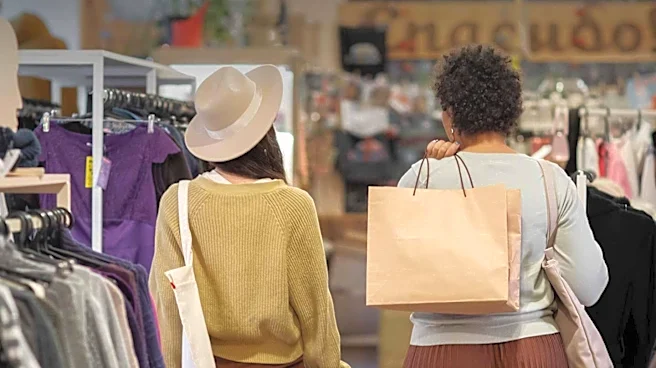
Thrifting, the practice of buying previously owned clothing and items, is becoming a significant trend in India, largely propelled by Gen Z. This movement allows consumers to access diverse styles, including everyday wear, distinctive designs, and vintage
pieces, often at more affordable price points than new garments. While thrifting offers economic benefits, shoppers are advised to carefully inspect items for condition, fit, and potential cleaning requirements, as not all second-hand items represent a bargain. Online platforms, local markets, and even clothing exchanges are facilitating this growing interest in pre-loved fashion, providing various avenues for consumers to engage with the trend. The environmental aspect of reusing clothes is also a factor, as it can extend the useful life of garments and potentially reduce demand for new production, though the actual environmental benefit depends on several factors like frequency of wear and transportation.
Why It's Important?
The rise of thrifting in India signifies a notable shift in consumer behavior, particularly among younger demographics. This trend has implications for the fashion industry, potentially influencing production cycles and the demand for new clothing. For consumers, it offers a more sustainable and budget-friendly alternative to fast fashion, promoting conscious consumption. The growth of online resale platforms and local second-hand markets also indicates an evolving retail landscape, where circular economy principles are gaining traction. This movement could lead to increased entrepreneurship in the second-hand market, creating new business opportunities for curated vintage shops and online sellers. Furthermore, it highlights a growing awareness of environmental impact, as consumers seek ways to reduce waste and extend the lifespan of products.
What's Next?
As thrifting continues to gain popularity, it is expected that more businesses will emerge to cater to this demand, including specialized online marketplaces and physical stores. There may also be an increase in community-led initiatives such as clothing exchanges and swap meets. The fashion industry might respond by incorporating more sustainable practices and potentially even collaborating with or acquiring second-hand platforms. Consumers will likely become more discerning, prioritizing quality and condition when purchasing pre-loved items. Educational efforts around sustainable fashion and the benefits of thrifting could also expand, further solidifying its place in mainstream retail. The trend's continued growth could also influence policy discussions around textile waste and circular economy models.
Beyond the Headlines
The mainstreaming of thrifting reflects a broader cultural shift towards sustainability and conscious consumption, particularly among younger generations who are increasingly concerned about environmental and ethical issues. This trend challenges traditional notions of fashion and ownership, promoting a more circular approach to resources. It also fosters creativity, as individuals learn to style pre-loved items with existing wardrobes, creating unique and personalized looks. The ethical dimension extends to reducing the carbon footprint associated with new garment production and mitigating textile waste. Moreover, thrifting can democratize fashion, making diverse styles accessible to a wider range of income levels, thereby reducing the pressure to constantly purchase new, often expensive, items.