





What's Happening?
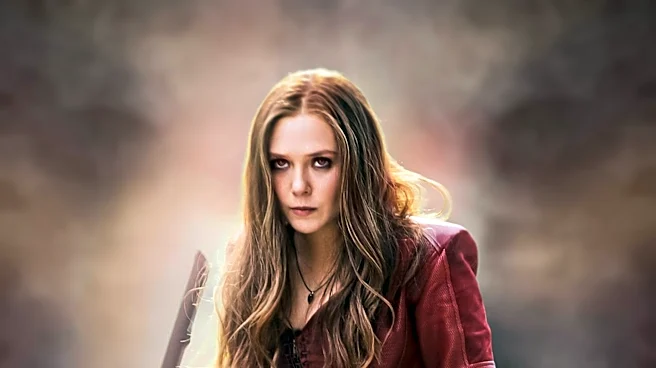
The portrayal of Scarlet Witch in recent Marvel productions, specifically 'WandaVision' and 'Doctor Strange and the Multiverse of Madness,' has ignited discussions regarding her character progression and the handling of her grief. One perspective views
her transformation into a more antagonistic role as a natural consequence of unresolved grief, aligning with traditional folklore archetypes of women as 'virgin, mother, or witch.' Conversely, another viewpoint expresses dissatisfaction with Scarlet Witch 'going evil,' particularly after the sacrifice of Tony Stark, which was seen as a definitive and poetic conclusion to that character's arc. This divergence in opinion highlights differing interpretations of the character's emotional journey and moral alignment.
Why It's Important?
This debate is significant for the U.S. entertainment industry, particularly for major franchises like the Marvel Cinematic Universe (MCU), as it reflects audience engagement and expectations regarding character development. The way a beloved character like Scarlet Witch is portrayed can influence fan loyalty, merchandise sales, and future creative decisions within the franchise. For Marvel Studios, understanding these diverse audience reactions is crucial for maintaining narrative coherence and satisfying its vast fanbase. It also underscores the broader cultural conversation about how grief and trauma are depicted in popular media and the implications of such portrayals on character arcs and audience perception. The discussion also touches on the role of women in storytelling, particularly how they are allowed to evolve beyond traditional archetypes.
What's Next?
The ongoing discussion about Scarlet Witch's character arc will likely influence future Marvel narratives and potentially lead to further exploration or redemption arcs for the character. Creators may choose to address these fan sentiments in upcoming projects, either by providing more context for her actions or by steering her character in a direction that reconciles the differing viewpoints. This could involve new series, films, or comic book storylines that delve deeper into her motivations and the consequences of her grief. The debate also serves as a feedback mechanism for studios, prompting them to consider how complex emotional themes are handled in their storytelling.
Beyond the Headlines
The differing interpretations of Scarlet Witch's journey delve into deeper psychological and cultural implications. The idea of unresolved grief leading to a 'witch' archetype touches upon ancient narratives and societal perceptions of female power and emotional intensity. This portrayal can spark conversations about mental health, the destructive nature of unchecked sorrow, and the societal pressures placed on women to conform to specific roles. The debate also highlights the power of collective storytelling in modern franchises, where audience interpretation and engagement can significantly shape the ongoing narrative and character development, making fans active participants in the evolution of these fictional worlds.