



What's Happening?
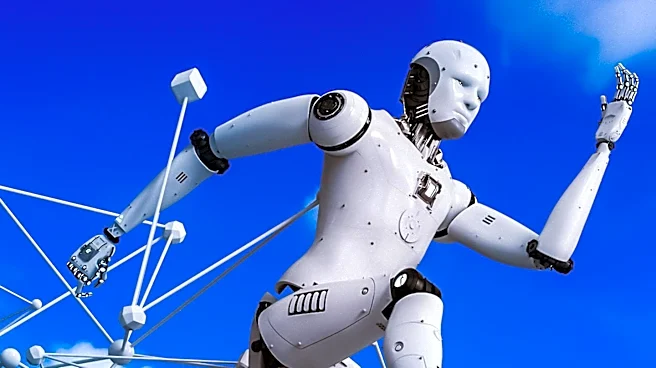
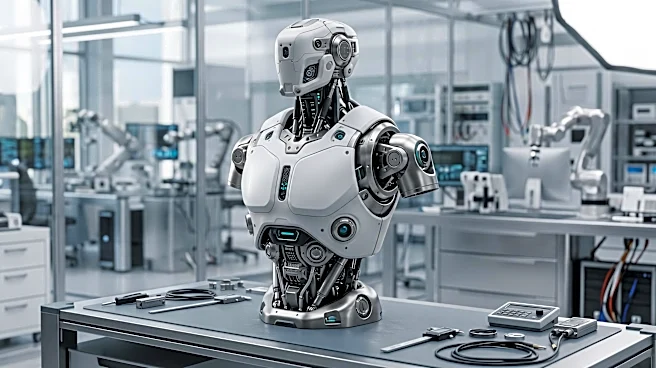
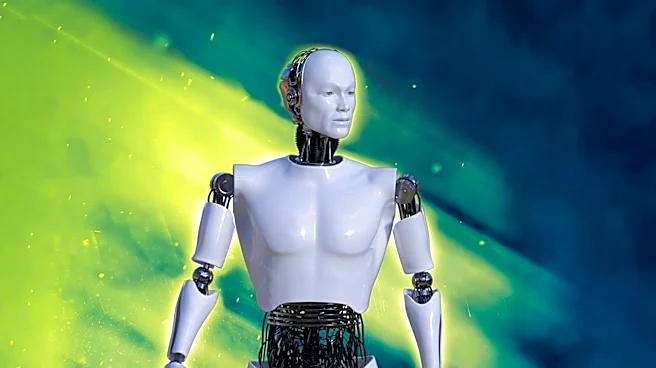
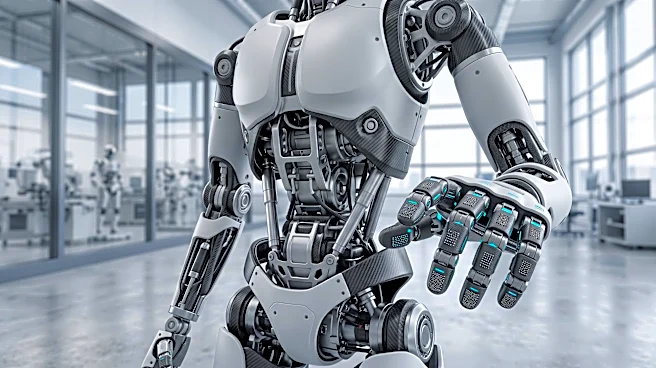
Black AI, a Tokyo-based developer specializing in humanoid robots, has successfully raised a seed funding round led by Incubate Fund. The startup, which originated as a University of Tokyo spinout, is focused on creating full-stack robots, encompassing
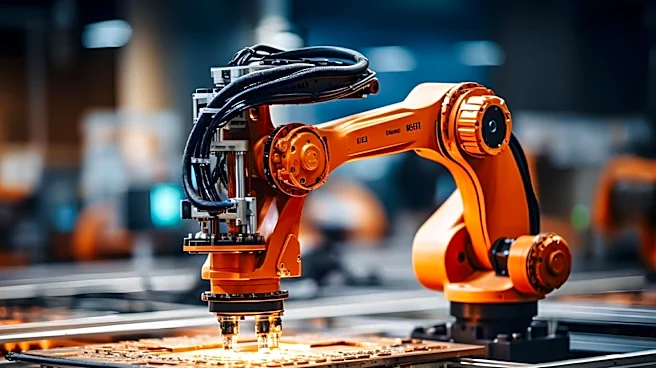
mechanical design, hardware, AI models, and whole-body motion control. Their primary objective is to automate manufacturing tasks that current industrial robots are unable to perform. Black AI aims to achieve "Zero-shot" general robot intelligence, enabling their robots to operate in unfamiliar environments and execute tasks without prior training or specific programming. Chief executive officer Xunran Li, who previously managed AI strategy at Deloitte, believes the physical AI sector is experiencing a significant moment, akin to the impact of ChatGPT. The company has already developed a self-designed prototype and is currently training motion and control models through simulation.
Why It's Important?
This development is significant as it highlights the growing momentum in the humanoid robot sector, particularly in Japan, a nation facing a deepening labor shortage. Black AI's approach of integrating hardware and AI as a single system suggests a potential shift in how robot intelligence is conceptualized and developed, emphasizing the interplay between physical structure and software. The pursuit of "Zero-shot" general robot intelligence could revolutionize manufacturing by allowing robots to adapt to diverse and unpredictable tasks, thereby increasing efficiency and flexibility in production lines. While the seed round size was not disclosed, the investment from Incubate Fund signals confidence in Black AI's vision and the broader potential of advanced AI and robotics to address industrial challenges. This trend could position Japan as a leader in next-generation robotics, impacting global manufacturing practices.
What's Next?
The immediate next steps for Black AI involve continued research and development, with a critical focus on the hardware performance and the practical application of their robots on factory floors. The company will need to demonstrate the efficacy of its "Zero-shot" general robot intelligence in real-world manufacturing environments. Success in these areas will be crucial for attracting further investment and scaling their operations. The undisclosed round size means that future funding rounds will likely be contingent on tangible progress and performance metrics. The broader trend indicates that other Japanese humanoid startups, such as ATOM and O-ID, are also gaining traction, suggesting a competitive and rapidly evolving landscape. Black AI's ability to leverage Japan's manufacturing base and advanced AI will determine its capacity to produce a globally competitive robot solution.
Beyond the Headlines
The emergence of companies like Black AI points to a deeper societal and economic transformation driven by advanced robotics and artificial intelligence. The concept of "Zero-shot" learning in physical AI raises ethical and philosophical questions about the nature of intelligence and autonomy in machines. As robots become more capable of handling unknown environments and tasks, the implications for human labor, job displacement, and the future of work will become increasingly prominent. The integration of hardware and AI as a single system also suggests a move towards more holistic and biologically inspired robotic design, potentially leading to more adaptable and versatile machines. This technological shift could redefine manufacturing processes, supply chains, and the global distribution of labor, necessitating new policy frameworks and societal adjustments to harness the benefits while mitigating potential disruptions.