





What's Happening?
Frank Giustra, a longtime board member of the International Crisis Group and founder of Goldcorp, recently discussed his views on gold's enduring value amidst global risks at the New Orleans Investment Conference. Giustra, who has over 45 years of experience
in the business, stated that he would only sell his gold if there were "world peace, honest politicians, and benevolent bankers," conditions he does not anticipate. He foresees "dozens of black swans lurking in the shadows" and expects policymakers to resort to easy money policies, such as quantitative easing (QE), in response. Giustra believes that central banks are gradually de-dollarizing and replacing their reserves with gold, citing the World Gold Council's report of central banks buying a net 321 tonnes of gold in the third quarter, the fastest pace since 2024. His memoir, 'The Money Dilemma: My Unlikely Path to Wealth, Philanthropy, and Peace,' was published on November 3.
Why It's Important?
Giustra's perspective is significant for investors and economic stakeholders, particularly those interested in precious metals and global financial stability. His belief in gold as a hedge against geopolitical and economic instability, coupled with his expectation of future quantitative easing, suggests a cautious outlook on the global economy. The idea that central banks are de-dollarizing and accumulating gold could signal a long-term shift in global monetary policy, potentially impacting the U.S. dollar's status as the world's reserve currency. This has profound implications for U.S. economic policy, trade, and financial markets. His insights, informed by his role at the International Crisis Group, connect geopolitical risks directly to financial market behavior, highlighting the interconnectedness of global security and economic stability.
What's Next?
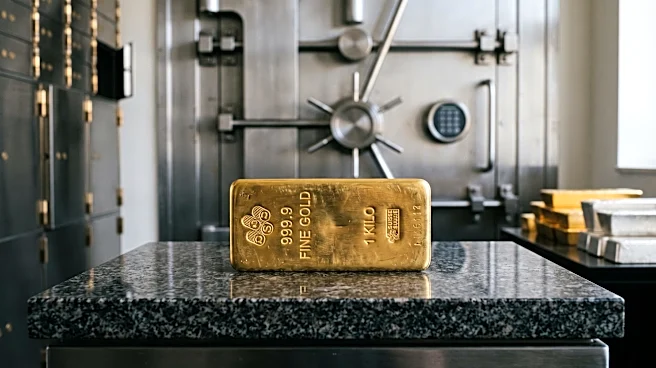
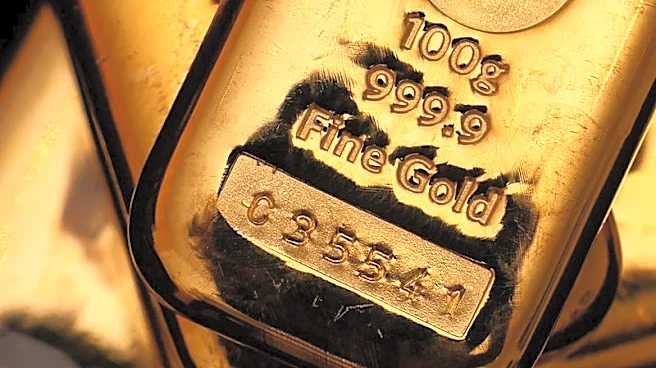
Giustra advises gold owners to hold onto their physical gold, viewing it as a means to preserve generational wealth. He anticipates that major mining companies will eventually be compelled to acquire junior miners to replenish their reserves, particularly in gold and copper, where he foresees a significant supply deficit. His views suggest continued volatility in global markets, with gold potentially serving as a safe haven asset. Policymakers will likely continue to grapple with economic challenges and geopolitical tensions, which, according to Giustra, will inevitably lead to further unconventional monetary policies. The ongoing actions of central banks regarding gold reserves will be a key indicator to watch for shifts in global financial strategies.
Beyond the Headlines
Giustra's 'Money Dilemma' memoir and his philanthropic endeavors highlight a deeper reflection on wealth and its purpose. His journey from accumulating wealth to dedicating significant resources to poverty initiatives suggests a broader societal shift towards integrating social responsibility with financial success. This perspective challenges the traditional view of business as solely profit-driven, advocating for a more holistic approach that considers global well-being. His involvement with the International Crisis Group further underscores the idea that economic stability and peace are intertwined, and that addressing global conflicts is not just a humanitarian concern but also a prerequisite for sustainable economic growth. This blend of financial acumen and philanthropic vision offers a compelling narrative for how individuals can leverage their influence to address complex global issues.