


What's Happening?
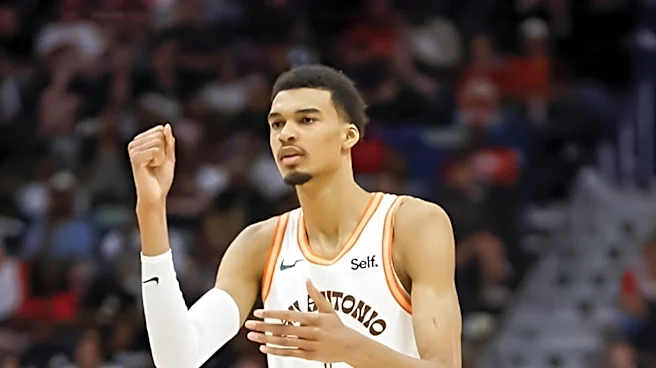
NBA star Victor Wembanyama has publicly stated his refusal to endorse sports betting companies, despite the growing trend of athletes partnering with such firms. Wembanyama, who plays for the San Antonio Spurs, expressed that he finds it 'very sad' to see
other players promoting these companies. His remarks follow recent announcements of high-profile NBA players, including LeBron James and Kevin Durant, securing deals with betting operators and prediction markets. James recently partnered with Polymarket, while Durant is a brand ambassador for FanDuel. Wembanyama emphasized that while NBA rules permit such partnerships, as long as players do not promote gambling related to the NBA itself, he personally chooses to prioritize inspiring others through his endorsements rather than focusing on financial gain from betting affiliations. He indicated that he has turned down previous endorsement opportunities that did not align with his values.
Why It's Important?
Wembanyama's stance highlights a growing ethical debate within professional sports regarding the proliferation of sports betting endorsements by athletes. His decision to forgo potentially lucrative deals underscores a personal commitment to values over financial incentives, which could influence other young athletes and spark further discussion about the social responsibility of sports figures. The increasing integration of sports betting into mainstream media and athlete endorsements raises questions about the potential impact on vulnerable populations and the integrity of the sport. While the NBA allows these partnerships under specific conditions, Wembanyama's public refusal brings attention to the moral considerations involved, potentially prompting a re-evaluation of such endorsements by teams, leagues, and individual players. This could lead to increased scrutiny of the types of partnerships athletes engage in and a broader conversation about the role of sports in society.
What's Next?
Wembanyama's public declaration may encourage other athletes to consider the ethical implications of their endorsement deals, potentially leading to a shift in how sports betting companies approach athlete partnerships. It could also prompt the NBA and other sports leagues to review their policies regarding athlete endorsements of gambling-related entities, possibly leading to stricter guidelines or more comprehensive educational programs for players. Stakeholders, including fan groups and public health advocates, might amplify calls for greater transparency and responsibility from athletes and leagues concerning gambling promotions. The ongoing discussion could also influence how younger generations of athletes perceive and engage with endorsement opportunities, prioritizing long-term impact and personal values over immediate financial gains. This situation sets a precedent for athletes to use their platforms to advocate for causes they believe in, even if it means declining significant income.
Beyond the Headlines
Wembanyama's decision transcends a simple endorsement refusal; it touches upon the broader cultural and ethical landscape of professional sports. In an era where athletes are increasingly seen as role models, his choice to prioritize 'inspiring in a good way' over financial gain from betting firms challenges the commercialization of sports. This move could foster a deeper conversation about the responsibilities of public figures and the potential societal impact of their endorsements, particularly concerning activities like gambling that carry inherent risks. It also highlights a generational shift, where some younger athletes may be more inclined to align their public image with personal values rather than solely pursuing maximum financial benefit. This could lead to a redefinition of what constitutes a 'successful' endorsement deal, moving beyond monetary value to include social and ethical considerations, and potentially influencing brand strategies across various industries.