






What's Happening?
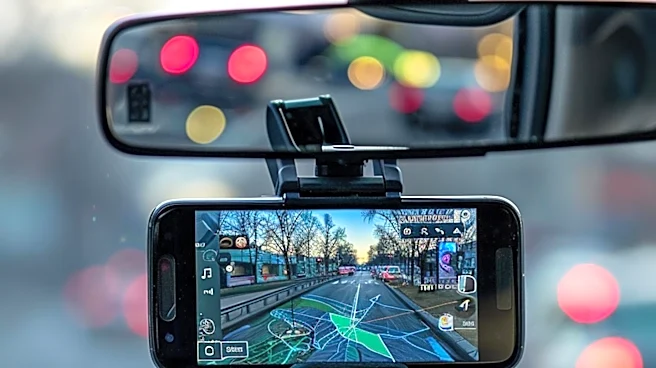
Recent reviews indicate that Waze is increasingly being favored over Google Maps for navigation within Android Auto. While both applications are owned by Google, Waze offers distinct advantages, particularly its real-time traffic updates and car-specific
features. Waze's strength lies in its community-driven data, which provides immediate information on road closures, accidents, flooding, and other conditions that can impact travel times. This allows Waze to suggest more efficient routes based on current circumstances, even recommending specific lanes. Additionally, Waze includes features tailored for drivers, such as optimizing routes based on fuel type and allowing users to sort nearby gas stations by price, distance, or brand, which can lead to cost savings on fuel.
Why It's Important?
The growing preference for Waze on Android Auto highlights the critical role of real-time, user-generated data in modern navigation. For U.S. drivers, particularly those commuting in congested urban areas or traveling long distances, accurate and immediate traffic information can significantly reduce travel time, fuel consumption, and stress. Waze's ability to provide granular details like lane recommendations and police sightings offers a more dynamic and responsive navigation experience compared to Google Maps, which, while comprehensive, is designed as an all-in-one solution rather than being solely focused on driving. This trend could influence how navigation app developers prioritize features, potentially leading to more specialized and driver-centric functionalities across the industry, benefiting millions of daily commuters and travelers.
What's Next?
The continued success of Waze on Android Auto may prompt Google to further differentiate its navigation offerings or integrate more of Waze's real-time, community-driven features into Google Maps. This could lead to enhanced traffic prediction algorithms, more detailed road condition alerts, and potentially more car-specific functionalities within Google Maps itself. For users, this competition and specialization could result in a wider array of advanced navigation options, allowing them to choose the app that best suits their specific driving needs. Developers of other navigation platforms might also take note, potentially investing more in real-time data aggregation and driver-centric features to remain competitive in the U.S. market. The evolution of these apps will likely continue to focus on improving efficiency, safety, and cost-effectiveness for drivers.
Beyond the Headlines
The rivalry between Waze and Google Maps, despite both being under the Google umbrella, illustrates a fascinating aspect of product development and market segmentation. It demonstrates that even within a single corporation, distinct products can thrive by catering to different user needs and preferences. Waze's success underscores the power of community engagement and crowdsourcing in delivering highly relevant and up-to-the-minute information, a model that could be applied to other sectors beyond navigation. This dynamic also highlights the ongoing challenge for tech giants to balance the integration of acquired companies with the preservation of their unique value propositions. For the broader U.S. tech landscape, it signifies a continuous drive towards specialized solutions that address specific pain points, even when a more generalist alternative already exists.