




What's Happening?
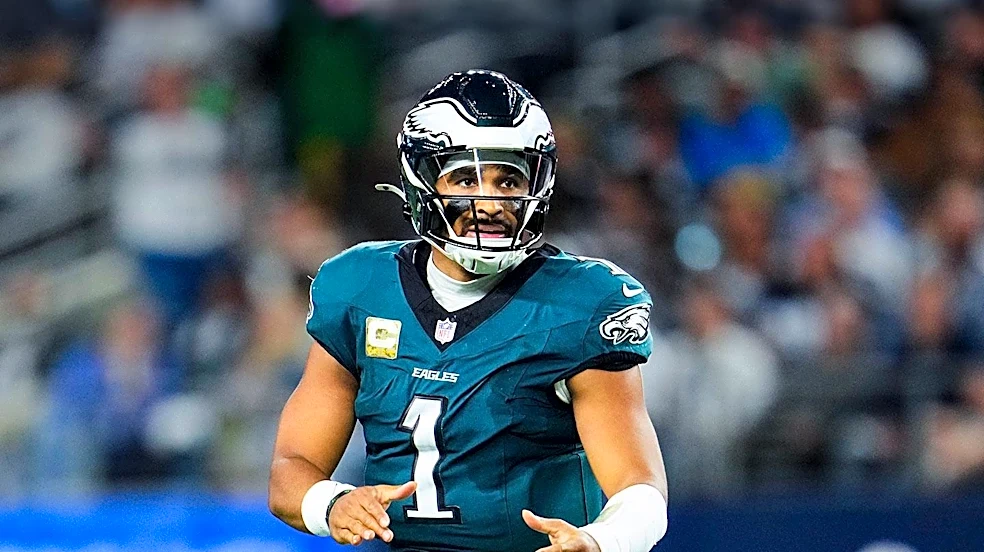
The NFL has confirmed that it was in communication with the Philadelphia Eagles regarding quarterback Jalen Hurts's blood clot prior to the team's Week 5 game against the Jacksonville Jaguars in London. The Eagles' statement on Thursday indicated that the team was aware
of the clot, which was discovered via an ultrasound after their arrival in London. Despite this, Hurts played 100% of the offensive snaps in that game, and his status was not changed to 'questionable' on the injury report. An NFL spokesperson stated that a public announcement would only be required if there was any doubt about a player's availability or impact on performance, which they claim was not the case for Hurts in Week 5. However, the clot's movement between Saturday and Tuesday ultimately rendered Hurts unavailable for Week 6.
Why It's Important?
This situation highlights a potential transparency issue within the NFL's injury reporting policies, particularly concerning information provided to the public and the betting community. The fact that a significant medical condition like a blood clot was known to the team and the league but not disclosed publicly raises questions about the integrity of injury reports. With the increasing prevalence of sports betting, the withholding of such critical health information could be seen as disadvantaging those who wager on games and player performances. This incident could prompt calls for stricter disclosure rules from fans, media, and potentially regulatory bodies, aiming to ensure that the public has access to more comprehensive and timely information regarding player health.
What's Next?
The NFL may face increased scrutiny regarding its injury reporting protocols. This incident could lead to internal discussions within the league about revising current policies to enhance transparency, especially given the growing intersection of professional sports and legal sports betting. Stakeholders, including sports media, betting organizations, and fan groups, might advocate for more detailed and immediate disclosures of player health issues. While the league currently maintains that teams are not required to list a player as 'questionable' if they are certain the player will play, the evolving nature of player injuries and the financial implications for the betting public could necessitate a reevaluation of these standards. It remains to be seen if Congress or regulatory agencies will intervene to mandate changes to the NFL's disclosure requirements.
Beyond the Headlines
The debate surrounding Jalen Hurts's blood clot and the NFL's injury reporting policies extends beyond mere transparency; it touches upon ethical considerations in sports. The league's current rules create a 'donut hole' of inside information, where teams and the league possess critical health data that is not shared with the public. This raises questions about fairness, particularly for individuals participating in sports betting, who rely on accurate information to make informed decisions. The situation also highlights the tension between a team's desire to maintain competitive advantage by not fully disclosing player health and the public's right to know, especially when financial stakes are involved. This incident could serve as a catalyst for a broader discussion on how much medical information professional sports leagues should be obligated to disclose, balancing player privacy with public interest and the integrity of the game.