






What's Happening?
One year after the enactment of the One Big Beautiful Bill Act (OBBBA), the federal energy incentive landscape has significantly reshaped, impacting investment strategies for businesses in energy infrastructure, manufacturing, carbon capture, hydrogen,
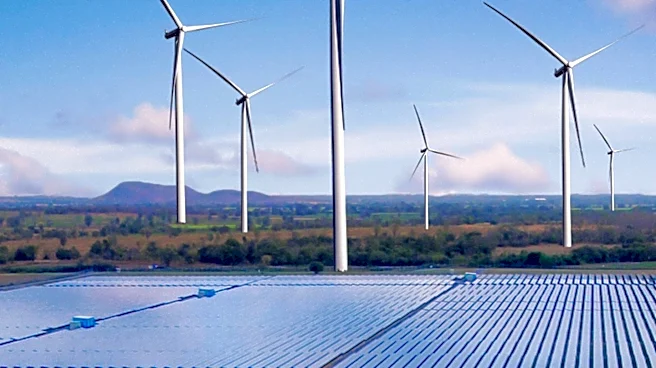
clean fuels, and renewable energy. The act has narrowed some incentive windows, while preserving or enhancing others. For instance, energy efficiency credits like Sections 179D and 45L, along with wind energy manufacturing credits, were set to expire or were reduced. Wind energy projects have seen significant cancellations (54 GW) due to these changes. Conversely, sections 45Q (carbon capture), 45V (hydrogen production), and 45Z (clean fuel production) were preserved or strengthened, with Section 45Z particularly benefiting ethanol plants by removing Induced Land Use Change (ILUC) from carbon scoring.
Why It's Important?
These shifts in federal energy incentives are crucial for U.S. businesses as they directly influence project timing, sourcing decisions, and overall economic viability of energy-related investments. The narrowing of certain credits, particularly for wind and solar projects, necessitates a re-evaluation of existing development plans and supply chain strategies, especially with new Prohibited Foreign Entity (PFE) requirements. Conversely, the enhancement of incentives for carbon capture, hydrogen, and clean fuels presents significant opportunities for companies in these sectors, potentially driving innovation and investment. The increased complexity of eligibility, now closely tied to operational decisions like supplier relationships and component origin, requires a more integrated approach involving procurement, operations, finance, and technical teams, moving beyond just the tax function.
What's Next?
Businesses are now tasked with understanding how the current incentive environment intersects with their planned investments for 2027 and beyond. This involves assessing time-sensitive investments against new construction or placed-in-service deadlines, reviewing how sourcing and project structure might affect eligibility due to PFE requirements, and exploring how multiple incentives can interact within the same investment model. Leadership teams are encouraged to gain earlier visibility into available incentives to inform major project decisions. The post-OBBBA environment demands a more selective and strategic approach to energy investments, ensuring that potentially meaningful incentives are considered alongside the broader investment case rather than driving the strategy itself.
Beyond the Headlines
The evolving energy incentive landscape reflects a broader federal strategy to steer investment towards specific energy technologies deemed critical for national goals, such as decarbonization and energy independence. The emphasis on domestic supply chains through PFE requirements signals a move towards strengthening U.S. manufacturing capabilities in the clean energy sector, potentially reducing reliance on foreign suppliers. The enhanced focus on carbon capture, hydrogen, and biofuels indicates a long-term commitment to these technologies as key components of a diversified energy future. This complex interplay of incentives and restrictions will likely foster innovation in eligible sectors while challenging traditional business models in others, ultimately shaping the future of the U.S. energy industry and its global competitiveness.