




What's Happening?
Aquent is actively recruiting a Senior Robotics Software Engineer specializing in AI Manipulation for a pioneering global manufacturing and technology leader in Mountain View, CA. This role is positioned at the intersection of classical robotics and cutting-edge
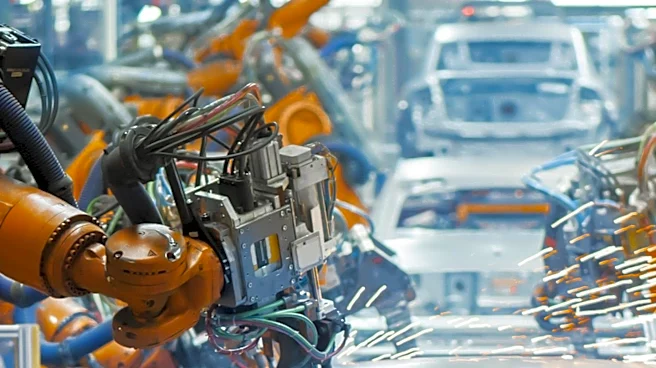
artificial intelligence, aiming to shape the future of industrial automation. The successful candidate will be responsible for developing advanced robotic applications for critical industrial tasks such as pick-and-place, part transfer, machine tending, material handling, and vision-guided manipulation. Key responsibilities include designing and implementing sophisticated perception systems, integrating AI models like VLA models and learned policies into real-time robotic workflows, and creating closed-loop systems for failure detection and recovery. The position requires a Master’s degree in a relevant technical field and at least two years of professional experience in robotic software development, with strong proficiency in Python, C++, and ROS 2.
Why It's Important?
This job opening signifies a critical demand for specialized talent in the rapidly evolving field of robotics and AI, particularly within the manufacturing sector. The integration of AI into industrial automation is poised to revolutionize how physical products are built on a massive scale, leading to increased efficiency, precision, and productivity. The role's focus on bridging cutting-edge research with practical application highlights the industry's move towards deploying advanced AI-driven prototypes into robust, real-world systems. This development is crucial for maintaining competitive advantage in global manufacturing and addressing complex challenges in physical AI. The emphasis on skills like integrating VLA models and learned manipulation policies indicates a shift towards more intelligent and adaptable robotic systems, which can perform intricate tasks with greater autonomy and less human intervention.
What's Next?
The demand for highly skilled robotics software engineers with AI expertise is expected to grow as more manufacturing and technology companies seek to automate and optimize their production processes. This trend will likely drive further innovation in robotic hardware and software, leading to more sophisticated and versatile industrial robots. Universities and technical programs may see increased enrollment in robotics, AI, and related engineering disciplines to meet this industry demand. Companies will continue to invest in research and development to integrate advanced AI models into robotic systems, pushing the boundaries of what automated systems can achieve. The successful deployment of these technologies will likely lead to significant transformations in factory automation, potentially creating new types of jobs focused on the design, maintenance, and supervision of these advanced robotic systems.
Beyond the Headlines
The role of a Senior Robotics Software Engineer in AI Manipulation extends beyond mere technical implementation; it touches upon the broader implications of human-machine collaboration and the future of work. As AI-powered robots become more prevalent in manufacturing, ethical considerations regarding job displacement, worker retraining, and the safety of human-robot interactions will become increasingly important. The development of robust, real-world AI-enabled robotic applications also raises questions about the reliability and resilience of automated systems in complex industrial environments. Furthermore, the need for engineers who can bridge the gap between theoretical AI research and practical robotic execution underscores the interdisciplinary nature of modern technological advancement, requiring a blend of computer science, engineering, and AI/ML expertise. This evolution will shape not only industrial processes but also the skills required for the future workforce.