





What's Happening?
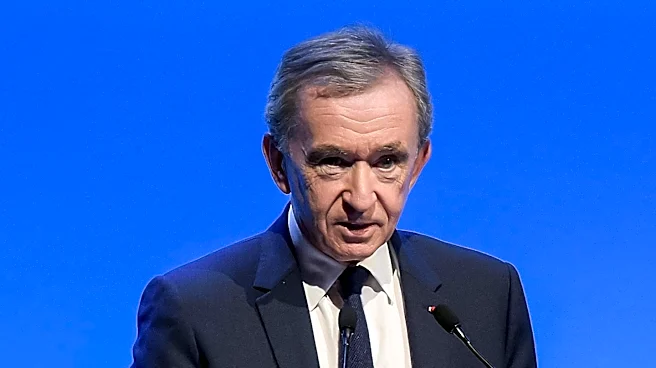
LVMH Moët Hennessy - Louis Vuitton Société Européenne (ENXTPA:MC) is currently perceived as potentially undervalued by 24%, according to analysis from Simply Wall St. This assessment comes as recent filings indicate Bernard Arnault, the head of the luxury
conglomerate, has extended his potential retirement age to 95 and merged family vehicle Agache with Christian Dior SE. These actions are consolidating voting control over LVMH. Despite these moves to tighten family control, the company's stock performance has shown mixed signals. While it has seen a slight increase of 2.57% over one day and 3.30% over 30 days, it has declined by 12.46% over 90 days, and its one-year total shareholder return has dropped by 34.47%. This suggests a fading momentum after a period of stronger performance in previous years. The Simply Wall St Community estimates a fair value of €525 for LVMH, significantly higher than its recent closing price of €401.05.
Why It's Important?
The potential undervaluation of LVMH stock, coupled with the consolidation of family control, presents a complex picture for investors and the broader luxury market. The tightening grip of the Arnault family on LVMH's voting control could signal long-term stability and a consistent strategic vision, which might be attractive to investors seeking enduring leadership in a volatile market. However, the recent decline in stock performance and one-year shareholder returns indicates that the market may be reacting to broader economic headwinds or specific concerns within the luxury sector, such as a softer Fashion & Leather Goods market. The discrepancy between the market price and the estimated fair value suggests that investors might be overlooking the company's underlying resilience. LVMH reported strong 2025 figures, including €80.8 billion in revenue and €17.8 billion in profit from recurring operations, along with a healthy balance sheet, which are indicators of a robust luxury leader rather than a distressed company.
What's Next?
The immediate future for LVMH will likely involve continued market observation to see if the stock price begins to align more closely with its perceived fair value. Investors will be closely watching upcoming financial filings and company announcements for further insights into performance and strategic direction. The market's reaction to the tightened family control will also be a key factor; while it can provide stability, it might also raise questions about corporate governance or future innovation if not managed effectively. The company's ability to navigate a potentially softer luxury market, particularly in its Fashion & Leather Goods segment, will be crucial in determining whether the current undervaluation narrative holds or is challenged. Stakeholders will also be looking for any further moves by Bernard Arnault regarding succession planning or strategic acquisitions that could impact the company's long-term trajectory.
Beyond the Headlines
The consolidation of voting control by Bernard Arnault and his family over LVMH highlights a broader trend in the luxury industry where founding families often seek to maintain tight control to preserve brand heritage and long-term vision. This approach can be seen as a double-edged sword; it can shield the company from short-term market pressures and activist investors, allowing for strategic decisions that prioritize brand integrity over immediate profits. However, it can also raise questions about corporate agility and the potential for stagnation if leadership becomes too insular. The perceived undervaluation of LVMH stock, despite strong fundamentals, could reflect a market skepticism towards the broader luxury sector's resilience in an uncertain global economy, or it could simply be a temporary disconnect that savvy investors might capitalize on. This situation also underscores the enduring power of family-led enterprises in the luxury goods market, where legacy and brand identity are paramount.