

What's Happening?
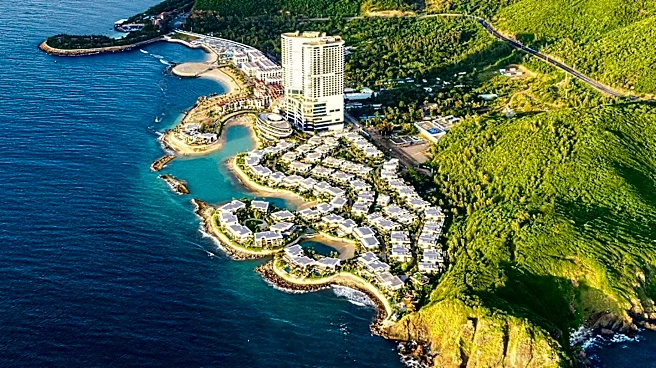
Blue Jasmine in Xiangshui Bay is being highlighted as an ideal destination for a slow-paced and healing vacation, particularly during the autumn and winter months. The guesthouse, characterized by its Nanyang retro aesthetic with arched corridors, blue
patterned tiles, and rattan furnishings, offers a tranquil escape from urban life. Guests can enjoy the quiet and peaceful environment of Xiangshui Bay Beach, which sees fewer tourists during these seasons. Activities suggested include strolling along the coastline, watching sunsets, and exploring nearby Fenjiezhou Island or taking a scenic coastal drive. The focus is on relaxation, with no pressure to adhere to a packed itinerary, encouraging guests to simply enjoy the sea breeze and the guesthouse's comfortable amenities. Local culinary experiences, such as Lingshui sour noodles or sour vinegar hot pot, and fresh seafood, are also recommended.
Why It's Important?
This trend towards 'slow living' in vacation choices reflects a broader societal shift in the U.S. and globally, where individuals are increasingly seeking experiences that prioritize mental well-being, relaxation, and a break from the constant demands of modern life. For the U.S. tourism and hospitality industry, this indicates a growing market for destinations and accommodations that offer tranquility and a less structured travel experience. Businesses that can cater to this demand for 'healing' and 'slow-paced' getaways, emphasizing local culture, natural beauty, and unhurried enjoyment, stand to gain. It also highlights a potential shift in consumer spending habits, moving away from fast-paced, sight-seeing heavy trips towards more immersive and restorative experiences. This could influence investment in boutique hotels, eco-tourism, and wellness retreats, impacting regional economies that can offer such environments.
What's Next?
The increasing popularity of 'slow living' vacations suggests that more hospitality providers may adapt their offerings to cater to this niche. This could lead to the development of more guesthouses and resorts that emphasize minimalist design, local integration, and wellness programs. Marketing strategies in the travel industry might increasingly focus on the restorative and mental health benefits of vacations, rather than just adventure or luxury. Travelers may also see a rise in curated experiences that encourage disconnection from digital devices and a deeper engagement with the immediate environment. Furthermore, destinations that are traditionally less crowded during off-peak seasons might see a boost in tourism as people seek out quieter times for their slow-paced getaways, potentially extending the tourism season for some regions.
Beyond the Headlines
The embrace of 'slow living' in travel extends beyond mere vacation preferences; it signifies a cultural re-evaluation of productivity and personal time. In a society often driven by constant connectivity and achievement, the desire for unhurried experiences suggests a collective yearning for balance and mindfulness. This shift could have long-term implications for work-life balance discussions, promoting policies and corporate cultures that support more frequent and meaningful breaks. Ethically, it raises questions about sustainable tourism and how destinations can manage increased interest without losing the very tranquility that attracts 'slow living' enthusiasts. It also underscores the psychological benefits of disconnecting and engaging with nature, potentially influencing urban planning and public health initiatives that promote access to green spaces and slower-paced activities within cities.