

What's Happening?
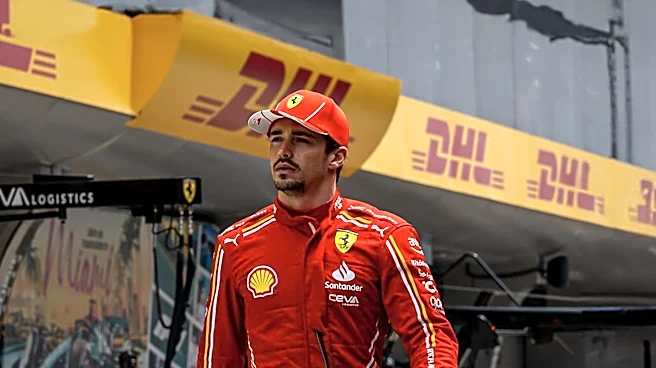
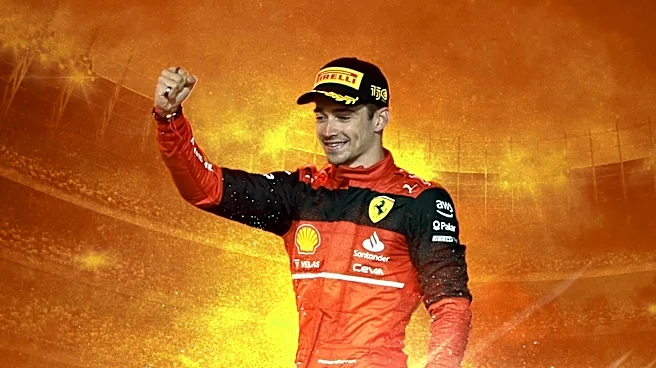
Charles Leclerc, a prominent Formula 1 driver for Ferrari, has reiterated his singular career goal: to win a world championship with the Italian team. According to Italian journalist Tommaso Ebhardt's new book 'Ferrari,' Leclerc's ambition dates back
to his youth, when he was not even allowed inside the Ferrari factory on his first visit as a teenager. Leclerc joined the Ferrari junior academy in 2016 and rapidly ascended through F3 and F2 before joining Ferrari's F1 team in 2019. He describes waking up and going to sleep with the thought of bringing a world championship to Ferrari. Despite finishing second in the drivers' standings in 2022, 146 points behind Max Verstappen, Leclerc remains confident in Ferrari's project and his ability to achieve this ultimate goal, citing his recent contract renewal as a testament to his belief in the team's long-term vision.
Why It's Important?
Leclerc's unwavering commitment to Ferrari and his belief in their future success are significant for the team's morale and strategic direction. His public declaration of certainty about winning a world title with Ferrari can inspire confidence among fans, investors, and team members, potentially fostering a more cohesive and determined environment within the Scuderia. For the broader Formula 1 landscape, a successful Ferrari, led by a world champion like Leclerc, would intensify competition at the top, challenging the dominance of other teams. This narrative also highlights the deep-seated loyalty and ambition that can exist between a driver and an iconic brand, influencing how other young talents might view their career paths in motorsport. His belief in the 'project' at Maranello suggests a long-term vision that could impact driver market dynamics and team development strategies in the coming years.
What's Next?
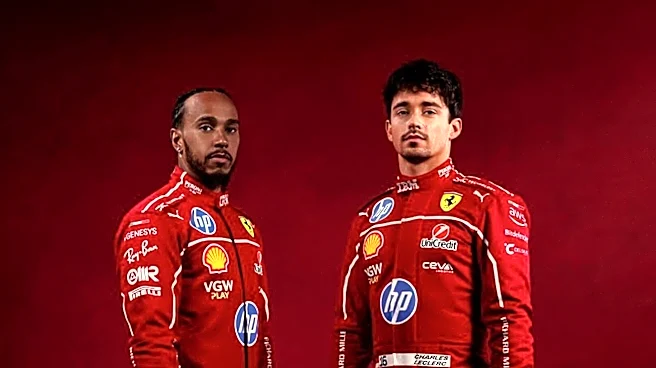
With Leclerc's renewed contract and expressed confidence, the immediate focus for Ferrari will be on translating this belief into on-track performance. The team will continue to develop their car and strategies for upcoming seasons, aiming to close the gap to leading competitors. Leclerc's performance in the current and future seasons will be under intense scrutiny as he strives to achieve his stated goal. His continued presence and leadership within the team will likely influence future driver pairings and technical decisions. The ongoing development of the Ferrari project, which Leclerc has expressed such strong faith in, will be a key area to watch, as will the team's ability to deliver a championship-contending car that matches his ambition and talent.
Beyond the Headlines
Leclerc's narrative extends beyond mere sporting ambition; it embodies a romanticized ideal of loyalty and perseverance in professional sports. In an era where driver movements are often dictated by short-term gains, his steadfast commitment to Ferrari, despite not yet achieving his ultimate goal, speaks to a deeper connection with the brand and its legacy. This dedication could serve as a powerful marketing tool for Ferrari, reinforcing its image as a team that inspires profound loyalty. Ethically, it raises questions about the pressure on athletes to deliver on such public declarations and the psychological toll of pursuing a singular, elusive goal. Culturally, it taps into the enduring mystique of Ferrari in motorsport, where winning a championship with the 'Red' team is often seen as the pinnacle of a racing career, transcending individual accolades.