







What's Happening?
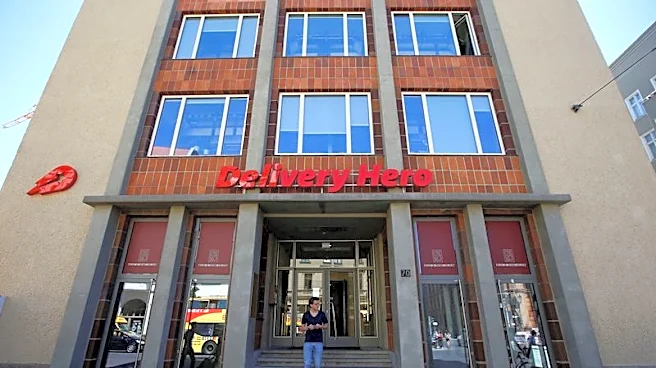
Uber Technologies Inc. has announced its agreement to acquire Delivery Hero SE, a German food-delivery company, for $14.8 billion. This acquisition will expand Uber's operations to 50 new markets, significantly increasing its global footprint. The deal,
which values Delivery Hero at 41.50 euros per share, represents a 26% premium over the initial offer made in May. The transaction is pending regulatory approval. In a related move, investment firm SSW Partners will acquire 14 other markets from Delivery Hero for $1.6 billion, with plans to sell these assets. This acquisition is part of Uber's strategy to strengthen its position in the competitive food delivery market, which has seen rapid consolidation in recent years.
Why It's Important?
Uber's acquisition of Delivery Hero marks a significant expansion of its global operations, particularly in Asia, Latin America, and the Middle East. This move positions Uber to better compete with rivals like DoorDash, which has also been expanding its international presence. The consolidation in the food delivery market reflects the intense competition and the need for companies to scale up to remain competitive. By acquiring Delivery Hero, Uber not only increases its market reach but also gains access to new technologies and operational efficiencies. This acquisition could lead to increased market share and revenue growth for Uber, while also setting the stage for further consolidation in the industry.
What's Next?
Following the acquisition, Uber plans to integrate Delivery Hero's operations into its existing infrastructure, leveraging common back-end architecture to streamline the transition. The company has committed to maintaining Delivery Hero's Berlin headquarters and workforce until at least 2029, signaling a long-term investment in the region. Uber's focus on cross-selling its ride-hailing and food delivery services in new markets could drive further growth and customer engagement. As the deal awaits regulatory approval, stakeholders will be watching closely to see how Uber navigates potential antitrust concerns and integrates the new operations into its global strategy.