







What's Happening?
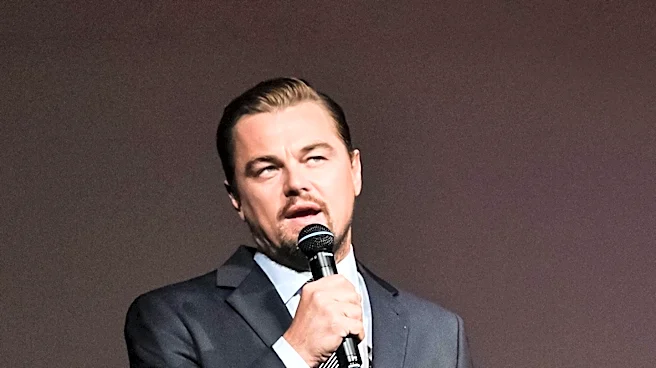
Ben Cornish, an actor based in Los Angeles, has spent years navigating a unique career as a Leonardo DiCaprio impersonator. Despite his own aspirations as an actor, his striking resemblance to the acclaimed celebrity has led him down a path of professional
impersonation. Cornish initially struggled with this likeness, finding it a professional liability that often overshadowed his individual acting pursuits. He recounts instances where his resemblance led to him being cut from projects, such as a network comedy where his appearance was deemed too distracting. However, an opportunity in a 'Scary Movie' spoof, where he parodied DiCaprio's character from 'Inception,' marked a turning point, leading to more impersonation gigs. He has since refined his craft, even using AI to analyze his appearance against DiCaprio's for maximum believability and employing shoe lifts to match DiCaprio's height, demonstrating a deep commitment to the role. Cornish's journey highlights the complex interplay between personal identity and the demands of a career built on mimicking another's persona.
Why It's Important?
Cornish's story offers a compelling look into the niche world of celebrity impersonation and its broader implications for identity, career, and public perception in the entertainment industry. His experience underscores the challenges faced by actors who, despite their own talents, find their careers shaped by an uncanny resemblance to a more famous individual. This situation raises questions about authenticity and the value placed on original talent versus mimicry in Hollywood. For the public, impersonators like Cornish provide a unique form of entertainment, offering a momentary escape from reality and a simulated interaction with a beloved celebrity. This phenomenon is particularly relevant in an age where digital manipulation and AI can create convincing likenesses, making the in-person experience of an impersonator a distinct and often sought-after form of engagement. The narrative also touches on the psychological toll and personal sacrifices involved in maintaining such a public persona, revealing the less glamorous aspects of a career built on illusion.
What's Next?
Ben Cornish is expected to continue refining his impersonation craft, viewing it as both an art project and a science experiment. He will likely continue to seek opportunities that allow him to blend his unique skill set with his desire for individual artistic expression. The ongoing evolution of AI and digital technologies could further influence his approach, potentially offering new tools for enhancing his likeness or creating new avenues for performance. As the public's fascination with celebrity and immersive experiences grows, the demand for skilled impersonators like Cornish may also increase, leading to more diverse engagements, from corporate events to themed parties. However, he also expresses a desire to be recognized for his own work, suggesting a potential future where he might seek roles that allow him to step out of DiCaprio's shadow and establish his own artistic identity, perhaps leveraging the visibility gained from his impersonation career to pursue more personal projects.
Beyond the Headlines
The narrative of Ben Cornish delves into profound themes of identity, self-perception, and the nature of celebrity in modern society. His struggle to reconcile his personal artistic ambitions with the demands of impersonating a global icon highlights the often-unseen pressures within the entertainment industry. It raises ethical questions about the commodification of identity and the blurred lines between reality and performance. The story also subtly critiques society's obsession with celebrity, where the mere likeness of a famous person can evoke strong emotional responses and create a unique form of connection for fans. Furthermore, Cornish's use of AI to perfect his impersonation points to a future where technology increasingly influences how we perceive and interact with public figures, potentially leading to new forms of entertainment and new challenges to authenticity. His journey is a microcosm of the broader cultural conversation about what it means to be an individual in a world saturated with images and personas.