





What's Happening?
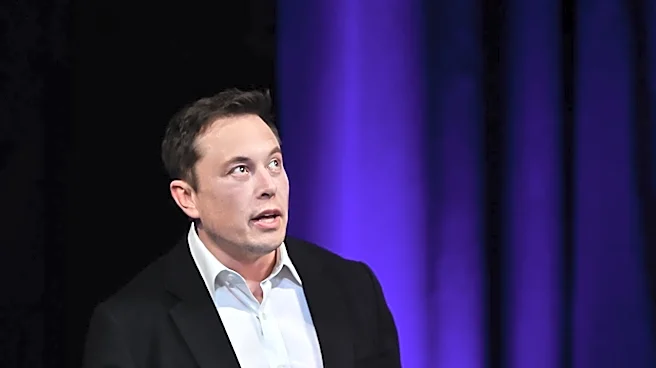
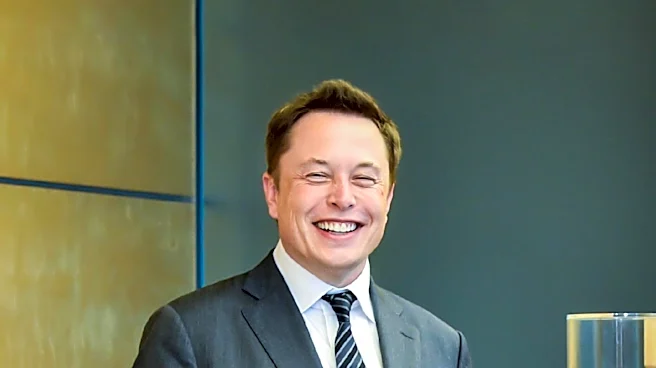
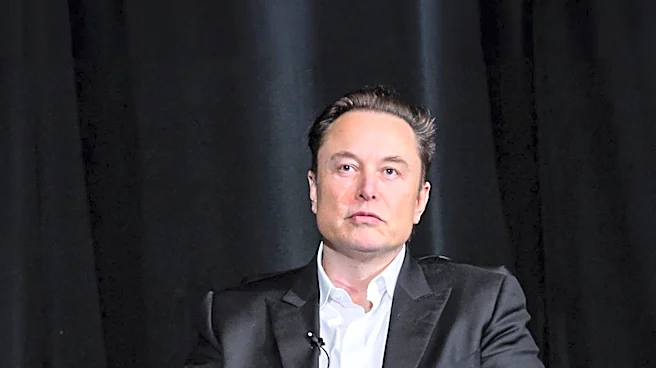
CNN and CBS News have reportedly not been disclosing that Elon Musk is an investor in their parent company, Skydance. A review of both networks' digital reporting, conducted before and after David Ellison confirmed Musk's shareholder status in Skydance,
found no instances of either outlet noting the investment. CNN anchor Jake Tapper did disclose Musk's investment in Skydance on his October 23 show, but this disclosure appears to be an anomaly rather than a reflection of the outlet's institutional stance. This lack of consistent disclosure raises questions about transparency in media ownership and potential conflicts of interest, especially given Musk's prominent role in various industries and his frequent presence in news coverage. The issue highlights a broader discussion within journalism regarding the need for news organizations to be transparent about financial ties that could influence public perception of their reporting.
Why It's Important?
The undisclosed investment by Elon Musk in Skydance, the parent company of CNN and CBS News, is significant due to its implications for journalistic integrity and public trust. Transparency about ownership and financial interests is a cornerstone of ethical journalism, as it allows the public to assess potential biases or conflicts of interest in news coverage. When a prominent and often controversial figure like Elon Musk invests in the parent company of major news outlets, the absence of disclosure can lead to perceptions of hidden agendas or undue influence. This situation could erode public confidence in the impartiality of CNN and CBS News, particularly when reporting on topics related to Musk's ventures, such as Tesla, SpaceX, or X (formerly Twitter). For the media industry, this incident underscores the ongoing challenge of maintaining independence and credibility in an increasingly complex media landscape where ownership structures can be intricate and influential.
What's Next?
Following the revelation of the undisclosed investment, it is likely that CNN and CBS News will face increased pressure to address their disclosure policies. The anomaly of Jake Tapper's individual disclosure suggests a lack of a unified institutional approach, which may prompt internal reviews and the implementation of clearer guidelines for reporting on financial ties. Media watchdogs and journalism ethics organizations may also scrutinize the networks' practices, potentially leading to public statements or policy changes aimed at enhancing transparency. This situation could also encourage other news organizations to re-evaluate their own disclosure protocols regarding investors and parent companies, particularly those with high-profile or politically active stakeholders. The long-term impact could be a push for greater industry-wide transparency standards to safeguard journalistic independence and public trust.
Beyond the Headlines
This situation extends beyond a simple disclosure issue, touching upon the evolving dynamics of media ownership and the potential for influence by powerful individuals. In an era where media consolidation and cross-industry investments are common, the lines between news production and corporate interests can become blurred. The lack of transparency regarding Elon Musk's investment in Skydance highlights a systemic vulnerability in how financial relationships are communicated to the public. This could foster a climate of skepticism, where audiences question the objectivity of news reports, especially concerning subjects tied to the investors. Ethically, it raises questions about the responsibility of media conglomerates to proactively inform their audiences about significant financial stakeholders, even if those stakeholders do not directly interfere with editorial decisions. The incident serves as a reminder of the constant vigilance required to uphold journalistic independence in a complex and interconnected global economy.