







What's Happening?
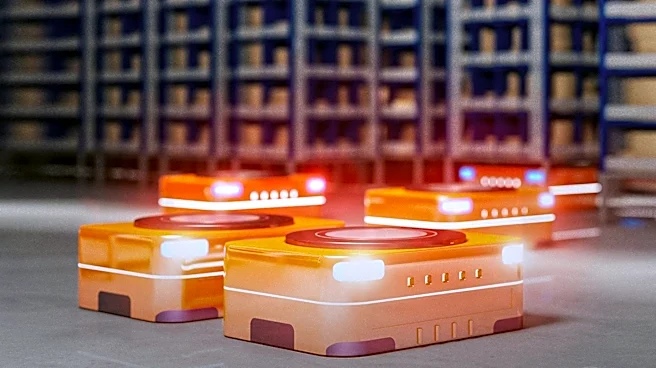
XPO Logistics is actively integrating warehouse robotics solutions to enhance operational efficiency, a trend driven by the rapid expansion of e-commerce fulfillment operations. The company is among several prominent end-users adopting advanced robotic systems
like Automated Guided Vehicles (AGVs), Automated Storage and Retrieval Systems (AS/RS), and goods-to-person systems. This adoption is a direct response to the increasing order volumes and complexity in e-commerce, which demand faster and more accurate fulfillment. Robotics help XPO Logistics and similar companies improve picking speed, optimize storage utilization, and boost order accuracy, enabling them to meet consumer expectations for rapid delivery while managing costs effectively. The broader warehouse robotics market is projected to exceed $9 billion by 2030, with mobile robots expected to dominate this segment.
Why It's Important?
The increased adoption of warehouse robotics by major logistics providers like XPO Logistics signifies a critical shift in the U.S. supply chain and logistics industry. This trend is vital for maintaining competitiveness in an e-commerce-driven economy where consumer demand for same-day and next-day delivery is paramount. By automating tasks such as material transport, storage, retrieval, sorting, and picking, companies can reduce reliance on manual labor, minimize errors, and optimize labor usage. This not only streamlines workflows and smooths supply chain coordination, especially during peak seasons, but also helps warehouses increase throughput and eliminate bottlenecks. The investment in robotics ensures that logistics providers can scale operations efficiently, manage rising labor costs, and meet the growing complexity of order fulfillment, ultimately benefiting consumers through faster and more reliable deliveries.
What's Next?
The continued growth in e-commerce is expected to further accelerate the adoption of warehouse robotics across the logistics sector. Companies like XPO Logistics will likely expand their deployment of autonomous transport systems and flexible robotic solutions to handle diverse product inventories and high-variety order fulfillment. Future developments will focus on integrating robotics with advanced fleet management and real-time inventory systems, as well as AI-driven warehouse management systems. This will lead to more sophisticated and interconnected warehouse ecosystems, enhancing operational reliability and scalability. The market will also see continued advancements in sensor technologies for precise navigation and improvements in battery life for mobile robots, further solidifying their role in modern logistics.
Beyond the Headlines
The widespread integration of warehouse robotics, exemplified by XPO Logistics' initiatives, has profound implications beyond immediate operational efficiency. It signals a long-term shift in the labor market within the logistics sector, potentially leading to a demand for new skill sets focused on robotics maintenance, programming, and data analysis, rather than traditional manual labor. This technological evolution also raises ethical considerations regarding job displacement and the need for workforce retraining programs. Furthermore, the enhanced efficiency and speed offered by robotics could set new industry standards for delivery times, putting pressure on smaller logistics companies to adopt similar technologies or risk falling behind. The increasing reliance on automation also highlights the importance of cybersecurity in protecting these interconnected systems from potential disruptions.