







What's Happening?
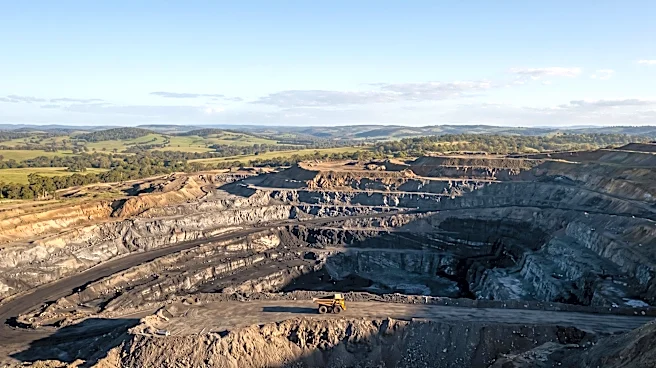
Glencore has secured approval to continue its Hunter Valley thermal coal operations in Australia until 2045. The decision was made by New South Wales' Independent Planning Commission, which determined that the economic benefits of the project outweighed
its environmental impact. This extension allows Glencore to maintain operations at its two open-cut coal mines in the region, which currently employ 1,500 workers. The approval was met with criticism from environmental groups, who argue that it will exacerbate pollution and hinder Australia's efforts to achieve its emissions targets. Conversely, Glencore welcomed the decision, emphasizing the continued employment, economic activity, and tax revenue generated by the operations for the Hunter region and New South Wales.
Why It's Important?
While this decision directly impacts Australia, it has broader implications for the U.S. and global energy markets, particularly concerning the ongoing debate about fossil fuels and climate change. The extension of a major coal operation in a significant coal-producing nation like Australia could influence international energy policies and investment trends. For the U.S., which is also navigating its energy transition, this decision highlights the economic and employment challenges associated with phasing out traditional energy sources. It underscores the tension between economic stability, job preservation, and environmental goals. U.S. companies involved in renewable energy or coal production may observe this development as a case study in balancing these competing interests, potentially affecting their own strategic planning and advocacy efforts regarding energy policy and climate regulations.
What's Next?
Following the approval, Glencore will proceed with its plans to operate the Hunter Valley coal mines until 2045. Environmental groups are expected to continue their advocacy against such extensions, potentially exploring legal avenues or public campaigns to challenge the decision or influence future policy. The Australian government will face ongoing pressure to reconcile its commitment to net-zero emissions by 2050 with the continued operation of significant fossil fuel projects. This situation may lead to further debates and policy adjustments regarding energy production, environmental regulations, and economic development in Australia, with potential ripple effects on international climate discussions and investment in both fossil fuels and renewable energy sectors.
Beyond the Headlines
The approval for Glencore's coal operations in Australia brings to light the complex ethical and economic dilemmas faced by nations heavily reliant on fossil fuel industries. It highlights the challenge of transitioning to a green economy while ensuring economic stability and employment for communities dependent on traditional industries. This decision could fuel discussions about 'just transition' policies, which aim to support workers and communities affected by the shift away from fossil fuels. It also raises questions about the effectiveness of current environmental impact assessment frameworks and the balance between short-term economic gains and long-term environmental sustainability. The global implications extend to the perception of Australia's climate commitments and could influence international investment in its energy sector, potentially favoring or disfavoring projects based on their environmental footprint.