



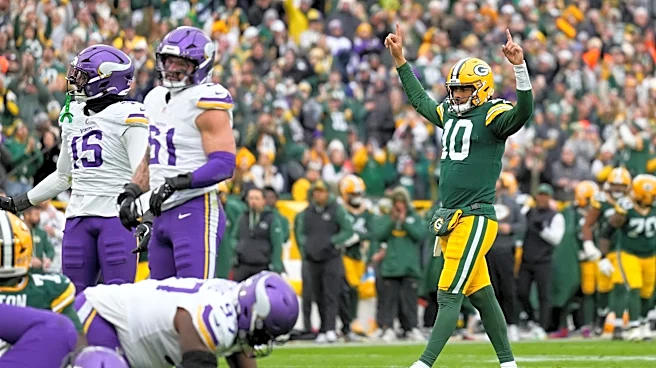
What's Happening?
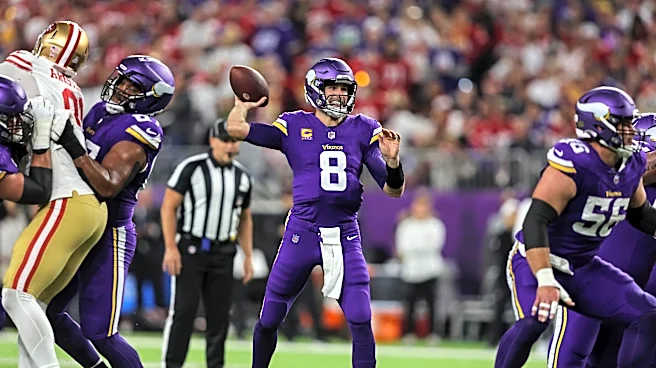
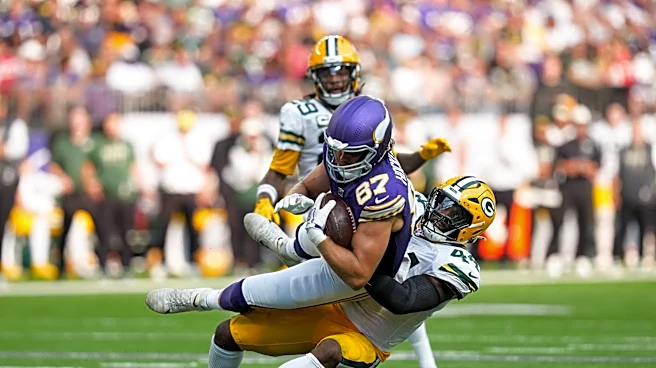
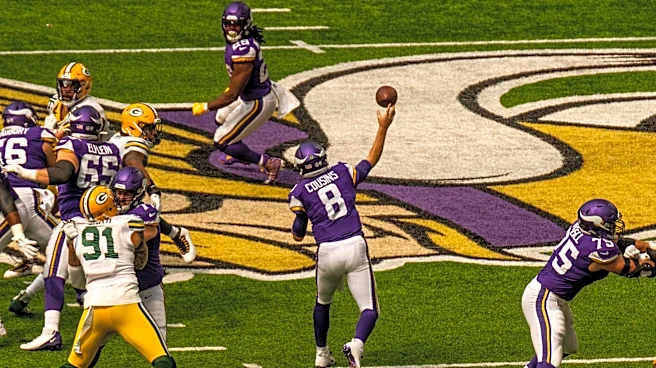
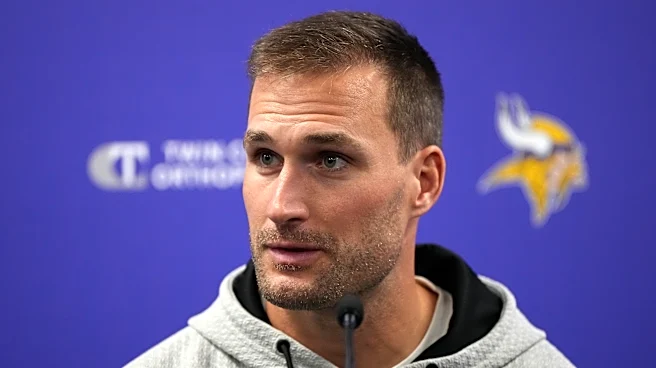
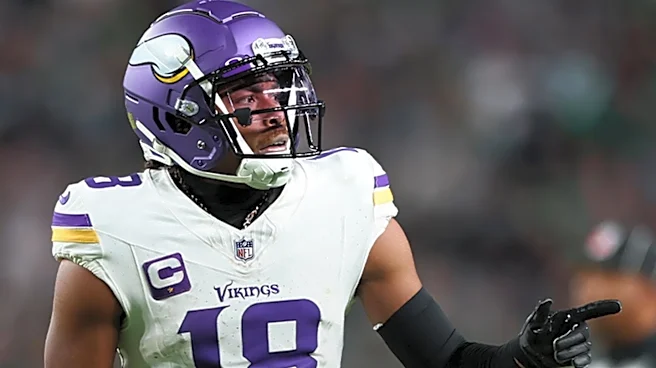
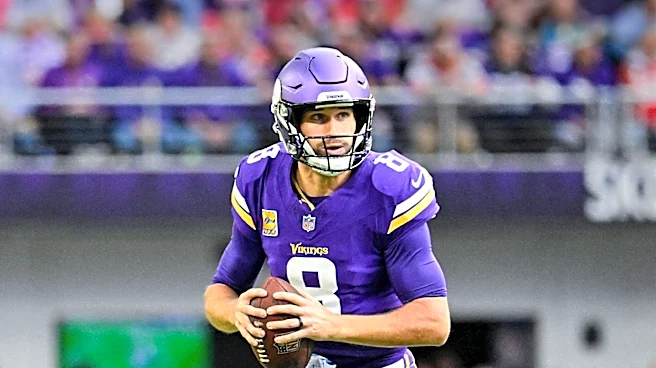
Minnesota Vikings wide receiver Justin Jefferson is poised for a significant performance against the Green Bay Packers, as quarterback Kirk Cousins returns to the starting lineup. This comes at a crucial time for Jefferson, who has experienced a less
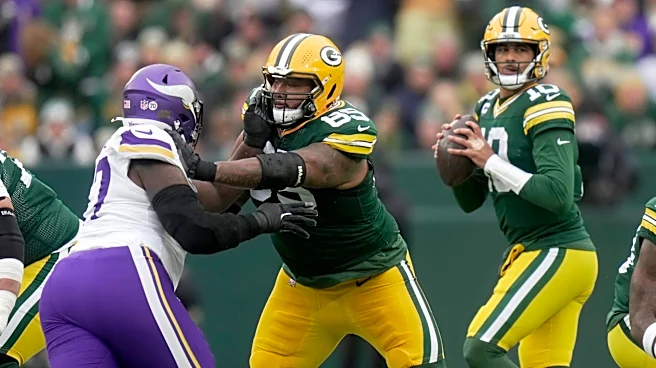
productive season with previous quarterbacks Kyler Murray and Carson Wentz, catching 31 passes for 393 yards and four touchdowns over seven appearances. The Packers' secondary is facing notable injury concerns, with safeties Xavier McKinney and Javon Bullard both questionable for the game, and linebacker Zaire Franklin doubtful. McKinney, a key player with five interceptions this season, was a late addition to the injury report with a foot injury. The Vikings' offensive coordinator, Kevin O'Connell, is expected to leverage these defensive vulnerabilities by potentially moving Jefferson into the slot more frequently, especially with tight end T.J. Hockenson unavailable and wide receiver Jordan Addison questionable due to a thumb injury. This strategic shift aims to exploit the middle of Green Bay's defense, particularly if their starting safeties are absent.
Why It's Important?
The potential resurgence of Justin Jefferson's performance, fueled by Kirk Cousins' return and the Green Bay Packers' defensive injuries, carries significant implications for the Minnesota Vikings' season and the NFC North race. Jefferson, a proven elite receiver, has been underutilized this season, and his increased involvement could dramatically boost the Vikings' anemic offense, which currently ranks low in yards per game, passing yards per game, and points per game. The historical chemistry between Cousins and Jefferson, highlighted by Jefferson's 1,809-yard season in 2022, suggests that Cousins' presence could unlock Jefferson's full potential. For the Packers, the absence or limited capacity of key defensive players like Xavier McKinney could severely compromise their ability to contain a top-tier receiver, potentially shifting the balance of power in a critical divisional matchup. This game could serve as a turning point for the Vikings, determining their trajectory in a highly competitive division and influencing their playoff aspirations. A strong showing from Jefferson could also re-establish his status as one of the league's premier offensive threats.
What's Next?
The immediate focus is on Sunday's game against the Green Bay Packers, where Justin Jefferson is expected to receive double-digit targets and surpass 80 receiving yards, according to analysts. The Vikings' coaching staff, led by Kevin O'Connell, is anticipated to implement a game plan that maximizes Jefferson's opportunities, potentially by moving him into the slot and utilizing pre-snap motion to challenge the Packers' potentially depleted secondary. Kirk Cousins' leadership and familiarity with Jefferson are expected to be key factors in this offensive strategy. Beyond this game, the Vikings may consider further roster adjustments to support their passing game, especially given the injuries to other key receivers. The team's performance in this crucial divisional matchup will likely influence their approach to future games and potential trade deadlines, as they aim to solidify their position in the NFC North. The outcome will also provide a clearer picture of the Vikings' offensive capabilities with Cousins back at the helm and Jefferson as the primary target.
Beyond the Headlines
The narrative surrounding Justin Jefferson's season highlights a broader issue in professional sports: the critical dependency of star players on consistent and effective quarterback play. Despite Jefferson's exceptional talent, his production suffered significantly with less experienced or less compatible quarterbacks. Kirk Cousins' return not only offers a statistical boost but also brings a sense of leadership and command that Jefferson explicitly noted as beneficial for team cohesion and execution. This situation underscores the intricate dynamics within a football team, where the synergy between key offensive players can profoundly impact overall team performance and individual statistics. Furthermore, the strategic adjustments by the Vikings' coaching staff to exploit defensive weaknesses, such as moving Jefferson into the slot, demonstrate the continuous tactical evolution in the NFL. This adaptability is crucial for teams to remain competitive, especially when facing injuries to their own roster or capitalizing on opponents' vulnerabilities. The game will also be a test of the Packers' defensive depth and their ability to adapt to significant personnel losses, potentially revealing long-term implications for their defensive strategy.