






What's Happening?
Beijing is undertaking an urban renewal initiative focused on transforming historic state-owned stores into popular tourist destinations to stimulate sales. A prime example is the Youyi Store in Chaoyang District, which has been renovated and is projected
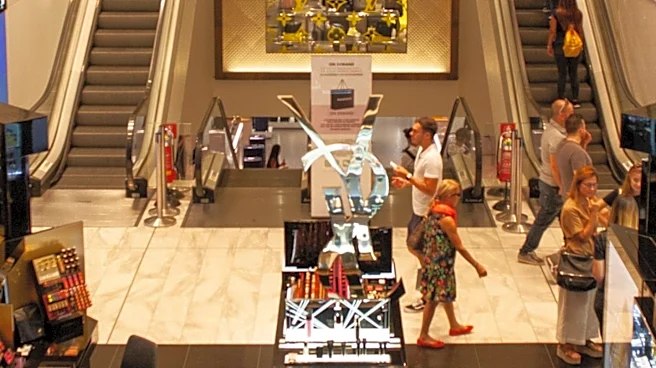
to attract over 3 million visitors this year, with annual sales expected to exceed 500 million yuan (US$69 million). This renovation aims to reverse previous losses. The store, once exclusively serving foreigners and requiring foreign-exchange certificates, now features a green garden in its former internal courtyard, creating a new space that integrates culture, commerce, tourism, and sport. A second phase of upgrades, including a new commercial street, is scheduled to open next year. Similarly, the Yong'an Road Department Store in Xicheng District has maintained its decades-old style, offering domestic products and attracting both long-time customers and younger generations drawn to its nostalgic ambiance. A restaurant chain has also opened a flagship outlet in the Youyi Store's former staff canteen, preserving the original building's exterior and incorporating historical elements.
Why It's Important?
This initiative is important as it represents a strategic effort by Beijing to leverage its cultural heritage for economic growth and urban revitalization. By transforming historic state-owned enterprises into modern retail and tourist attractions, the city aims to boost local consumption and attract both domestic and international visitors. The projected financial success of the Youyi Store, with its significant sales and visitor forecasts, demonstrates the potential for these revitalized spaces to contribute substantially to the local economy. This approach also helps preserve the unique character and history of these establishments, offering a blend of nostalgia and contemporary retail experiences. The focus on domestic products and traditional services, as seen in the Yong'an Road Department Store, supports local industries and caters to a growing interest in authentic cultural experiences, potentially setting a precedent for similar urban renewal projects in other cities.
What's Next?
The Youyi Store is set to undergo a second phase of upgrades, with a new commercial street scheduled to open next year, indicating a continued investment in this revitalization strategy. The success of these initial projects will likely influence the expansion of similar initiatives across Beijing and potentially other Chinese cities. The focus will remain on balancing the preservation of historical elements with the introduction of modern commercial and cultural offerings to sustain visitor interest and economic viability. Stakeholders, including local businesses, tourism operators, and government entities, will be closely monitoring the performance of these revamped stores to assess the long-term impact on urban development and economic growth. The ongoing efforts to attract more visitors and increase sales will involve continuous marketing and the potential introduction of new attractions and services.
Beyond the Headlines
Beyond the immediate economic benefits, this urban renewal strategy carries deeper cultural and social implications. It reflects a broader trend of re-evaluating and repurposing historical assets in rapidly modernizing cities. By preserving and integrating these state-owned stores into contemporary urban life, Beijing is not only boosting its economy but also fostering a sense of continuity and cultural identity. The appeal to younger generations, drawn by the 'nostalgic ambiance,' suggests a successful bridging of past and present, creating spaces that resonate across different age groups. This approach also highlights a shift in the role of state-owned enterprises, moving beyond their traditional functions to become cultural and commercial hubs. The initiative could serve as a model for other cities grappling with how to modernize while retaining their unique historical fabric, demonstrating that economic development and cultural preservation can be mutually reinforcing.