




What's Happening?
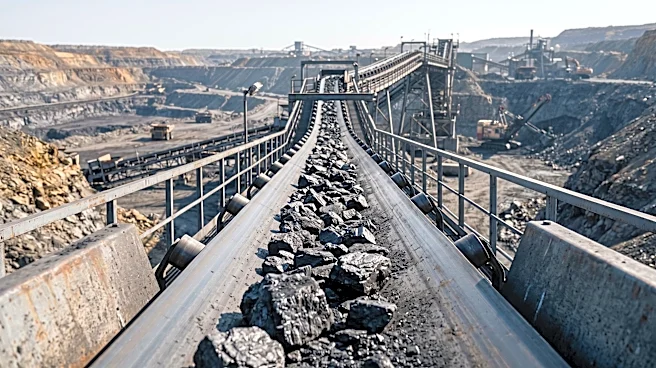
Glencore's Elk Valley operations (EVR) experienced a 17% year-over-year decline in metallurgical coal production during the first nine months of 2026, totaling 16.1 million tonnes compared to 19.4 million tonnes in the same period of 2025. This decrease
is attributed to factors such as pit sequencing, development of new mining areas, lower plant throughput and recovery yields, and geotechnical and weather-related challenges. Despite this, the third quarter showed an improvement, with production rising to 5.8 million tonnes from 5.0 million tonnes in the second quarter, driven by improved yields and increased plant operating hours after scheduled maintenance. Glencore anticipates further production increases in the fourth quarter due to mine sequencing and the completion of processing plant maintenance. The company has maintained its full-year steelmaking coal production guidance of 30–32 million tonnes across its Canadian and Australian operations, though output is expected to be at the lower end of this range. Metallurgical coal prices remain strong, with premium hard coking coal assessed at US$258.50 per tonne FOB Australia on November 17, and Glencore reporting an average settlement price of US$236.80 per tonne for the first half of 2026, a 28% increase from the previous year.
Why It's Important?
The production challenges at Glencore's Elk Valley operations, despite robust metallurgical coal prices, highlight the complexities and inherent risks within the mining sector. For U.S. industries reliant on steelmaking coal, such as manufacturing and construction, potential supply fluctuations from major global producers like Glencore could impact raw material costs and availability. While Glencore's realized prices for steelmaking coal have increased by approximately 24%, improving per-tonne returns despite higher operating costs, sustained production shortfalls could lead to tighter global supply. This situation could indirectly affect U.S. businesses by driving up import costs for metallurgical coal or steel products, potentially influencing domestic production decisions and consumer prices. The significant capital investment of US$1.4 billion annually planned by Glencore for EVR between 2026 and 2028 underscores the long-term commitment to recovering and sustaining production, which is crucial for global supply stability and for the company's financial performance.
What's Next?
Glencore expects production to increase in the fourth quarter, supported by mine sequencing and the completion of planned processing plant maintenance. The recovery of EVR production is a priority heading into 2027, with the company committing approximately US$1.4 billion in average annual capital expenditure for EVR between 2026 and 2028. This investment will fund additional haul trucks, shovels, increased material movement capacity, deferred stripping, and water treatment infrastructure. The proposed Fording River Extension (FRX) project, currently undergoing environmental assessment, is critical for EVR's long-term production plans, aiming to extend mining at Fording River Operations by approximately 35 years. The outlook for 2027 remains relatively favorable for metallurgical coal prices, though some moderation is anticipated. The immediate focus for EVR is on restoring production, improving processing yields, controlling unit costs, and delivering capital projects to support future mining. Fourth-quarter production results will provide a clearer measure of EVR's operational recovery.
Beyond the Headlines
The ongoing challenges at Glencore's Elk Valley operations, particularly the decline in production despite strong market prices, underscore broader issues within the global mining industry, including the increasing difficulty of maintaining consistent output from mature assets. The substantial investment in water treatment infrastructure, with approximately $2 billion already invested and further expansion planned, highlights the growing environmental compliance costs and the critical role of sustainable practices in modern mining. The Fording River Extension project's environmental assessment process reflects the heightened scrutiny and regulatory hurdles faced by large-scale resource projects, which can significantly impact long-term supply stability. The interplay between operational challenges, environmental regulations, and market dynamics in the metallurgical coal sector could influence global steel production trends and the strategic decisions of major industrial players, potentially accelerating shifts towards alternative materials or more localized supply chains in the long run.