


What's Happening?
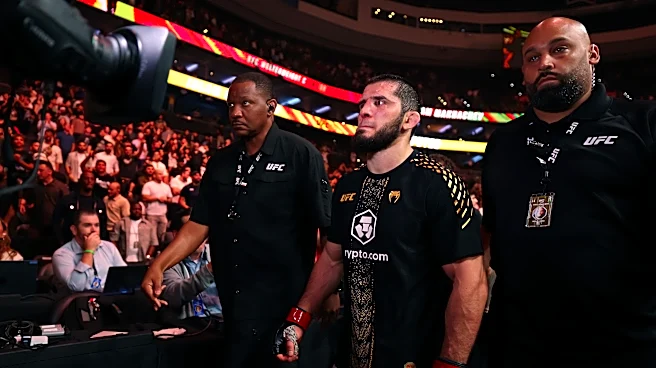
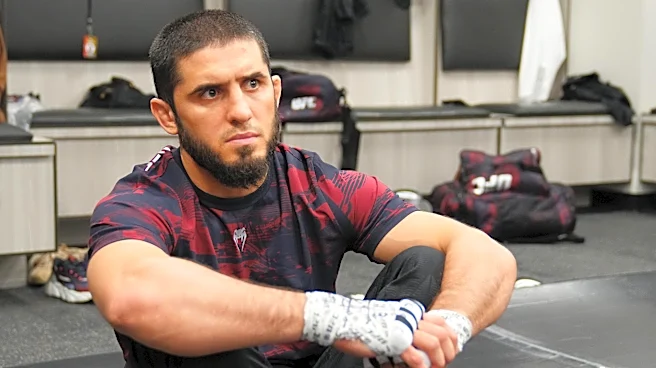
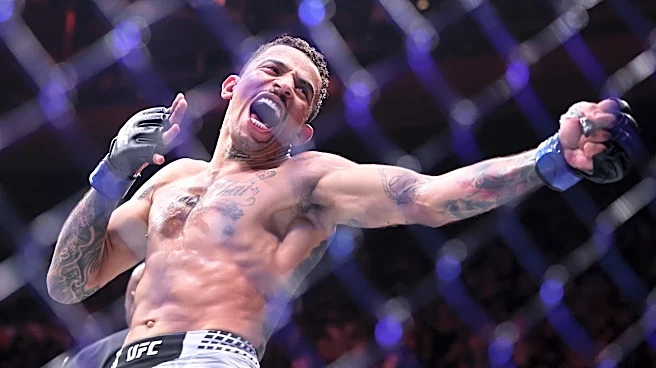
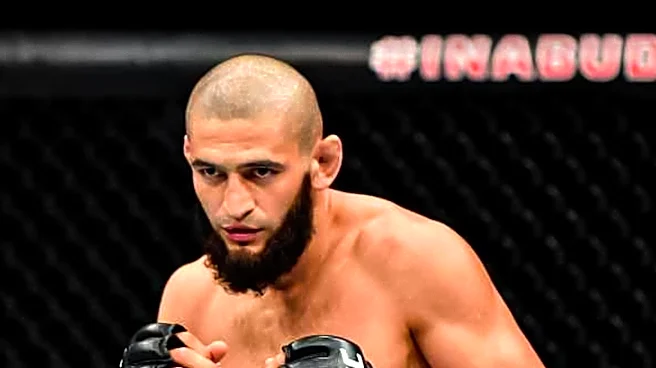
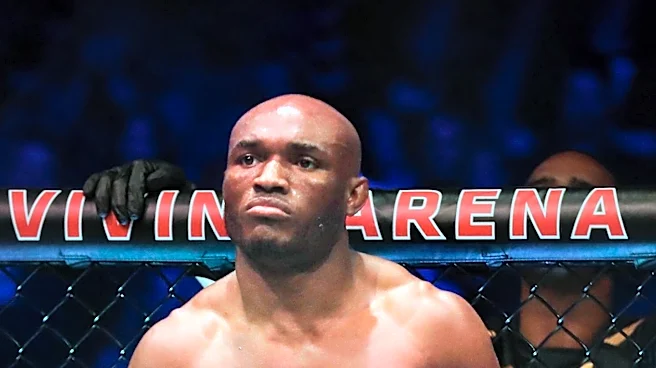
Former UFC champion Kamaru Usman has publicly supported Islam Makhachev's decision to decline a January title defense at UFC 336 against Carlos Prates. Makhachev stated he would not fight until after Ramadan, leading to the creation of an interim welterweight
title bout between Prates and Michael Morales. Usman, speaking on his 'Pound 4 Pound' podcast, argued that Makhachev, as a champion, has earned the right to be selective and that Prates and Morales need 'one more big win' to prove their worthiness for an undisputed title shot. Usman believes the current welterweight title picture is unfolding appropriately, with contenders needing to solidify their positions.
Why It's Important?
Kamaru Usman's endorsement of Islam Makhachev's decision carries significant weight within the UFC community, given Usman's status as a former dominant champion. His support provides a counter-narrative to the fan criticism and calls for Makhachev to be stripped of his title, suggesting that experienced fighters understand the nuances of a champion's position and the strategic timing of defenses. This perspective highlights the internal dynamics of the sport, where respect among elite fighters can influence public perception. It also underscores the idea that champions, once established, gain a certain level of autonomy in their career choices, which can sometimes conflict with the promotion's immediate scheduling needs.
What's Next?
The interim welterweight title fight between Carlos Prates and Michael Morales at UFC 336 will proceed, with the winner likely facing Islam Makhachev after Ramadan, which means a return no earlier than May 2027. Usman's comments may help to temper some of the criticism directed at Makhachev, but the debate about champion activity will likely continue. The outcome of the interim title fight will be crucial in determining the next challenger for Makhachev, and the eventual unification bout will be highly anticipated, potentially validating Usman's assessment of the contenders' need for further proving themselves.
Beyond the Headlines
Usman's defense of Makhachev touches on the unwritten rules and respect dynamics within professional combat sports. It suggests that a champion's status is not merely about holding a belt but also about the perceived 'right' to dictate terms, earned through consistent high-level performance. This perspective contrasts with the more commercial demands of a promotion that seeks frequent, high-profile events. It also subtly critiques the depth of the current welterweight contender pool, implying that no single fighter has yet emerged as an undeniable threat, thus justifying Makhachev's wait. This situation highlights the complex interplay between athletic achievement, personal choice, and the business imperatives of a major sports league.