





What's Happening?
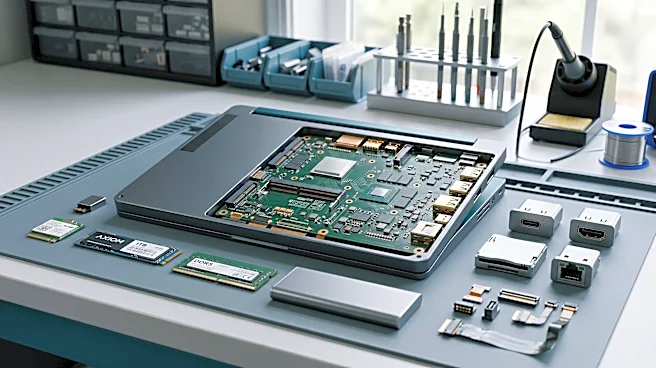
Framework Laptops are drawing attention for their pricing strategy, with some consumers and commentators on Hacker News noting that the devices are significantly more expensive than comparable hardware from other brands. Despite offering repairability
and an ethical product focus, the higher cost is a point of contention. Users accustomed to running Linux on standard laptops for over a decade question the concept of a 'Linux laptop,' asserting that most modern laptops are compatible with Linux. The discussion highlights a perceived trade-off between Framework's unique selling propositions—repairability and ethical manufacturing—and its market competitiveness in terms of price. Some argue that supporting such a product is necessary for its long-term viability, even if it means paying a premium.
Why It's Important?
This pricing debate is important for the broader U.S. consumer electronics market, particularly for niche brands attempting to differentiate through ethical practices and repairability. Framework's strategy challenges the prevailing model of mass-produced, often less repairable, and more affordably priced laptops. If Framework can sustain its business despite higher prices, it could signal a growing consumer willingness to pay more for products that align with values like sustainability and the right to repair. Conversely, if the price point proves to be a significant barrier, it could indicate that these values, while appreciated, are not yet strong enough to overcome cost considerations for a majority of consumers. This situation also impacts the 'Linux laptop' segment, as it questions whether specialized hardware is truly necessary or if standard laptops suffice for the Linux community.
What's Next?
Framework will likely need to continue balancing its commitment to repairability and ethical production with market demands for competitive pricing. Future developments could include efforts to reduce manufacturing costs, expand product lines to offer more budget-friendly options, or further articulate the long-term value proposition of their repairable design to justify the premium. The company's growth and ability to scale will depend on whether a sufficient segment of the market prioritizes these features over immediate cost savings. The ongoing dialogue among tech enthusiasts and consumers will continue to shape perceptions and potentially influence Framework's strategic decisions regarding pricing and market positioning.
Beyond the Headlines
The discussion around Framework's pricing touches on deeper implications concerning consumer values and the future of product design. It highlights a tension between the desire for ethical and sustainable products and the economic realities of the consumer market. The 'right to repair' movement, which Framework champions, is gaining traction, but its economic viability for manufacturers remains a challenge. This scenario could influence policy discussions around product longevity, repairability standards, and the environmental impact of electronics. It also raises questions about whether consumers are truly prepared to internalize the costs associated with more sustainable and repairable goods, or if price will always remain the dominant factor in purchasing decisions. The success or struggle of companies like Framework could serve as a bellwether for the broader shift towards a more circular economy in technology.