




What's Happening?
Physical AI is revolutionizing automation by enabling machines to perceive, reason about, and act in the real world, moving beyond traditional programmed systems. Unlike previous forms of AI that primarily operated in digital environments, physical AI combines
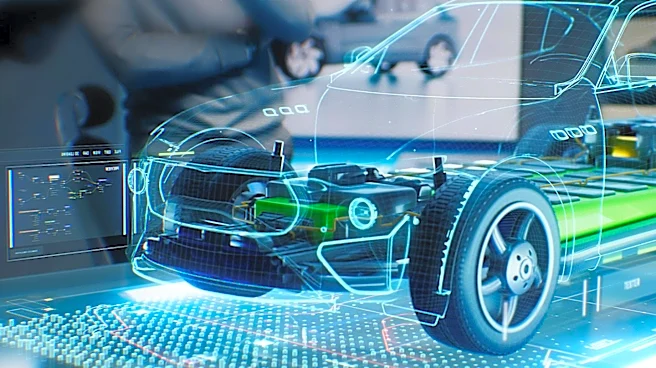
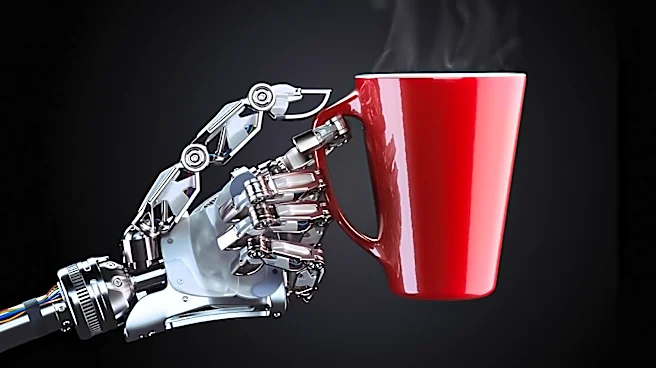
AI models with sensors, cameras, software, and physical equipment like robots and industrial machinery. This allows systems to respond to changing conditions in real time and adapt their movements to tasks, rather than following predetermined instructions. Key advancements making physical AI possible include vision-language-action models, high-fidelity simulation and digital twins for virtual testing, and synthetic data for training AI in complex scenarios. Examples of physical AI in action include AI-driven robot motion, collaborative robots (cobots) that adapt to their surroundings, factory digital twins for process optimization, and general-purpose robots capable of learning diverse tasks. This evolution is driven by factors such as labor pressure, reshoring, and the demand for automation that can handle high-mix, low-volume production.
Why It's Important?
The emergence of physical AI holds significant implications for U.S. industries, particularly manufacturing and logistics. By enabling more adaptive and intelligent automation, physical AI can address critical challenges such as labor shortages and the need for increased production flexibility. This technology allows robots to perform more complex tasks and operate in dynamic environments, leading to enhanced operational efficiency, reduced costs, and improved safety in workplaces. Businesses that adopt physical AI stand to gain a competitive advantage through optimized production processes and the ability to respond quickly to market demands. Conversely, industries slow to integrate these advancements may face challenges in maintaining productivity and competitiveness. The development of physical AI also fosters innovation in related fields like robotics, machine vision, and software, creating new economic opportunities and driving technological progress across the nation.
What's Next?
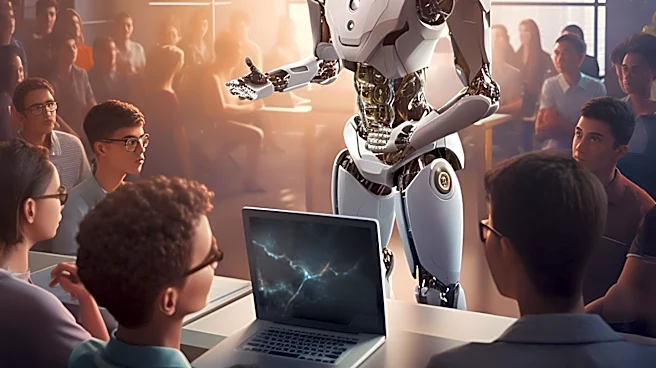
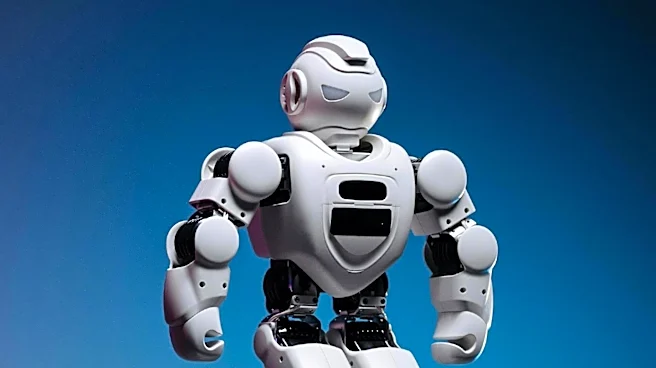
The future of automation will increasingly feature physical AI, with a focus on creating more adaptive systems and intelligent robotics. Events like Automate 2027 will showcase the latest advancements in physical AI, including robotics, machine vision, software, and simulation technologies. The integration of generative and agentic AI capabilities into physical AI will continue to expand, enabling machines to handle even more complex tasks with greater precision. We can expect to see a rise in humanoid robots as a visible example of physical AI, capable of operating in human-designed environments and interacting with the world through real-time feedback. Further research and development will likely focus on refining vision-language-action models, improving simulation fidelity, and expanding the use of synthetic data to train AI for a wider range of real-world applications. This ongoing evolution will lead to more sophisticated and versatile automation solutions across various sectors.
Beyond the Headlines
The shift towards physical AI represents a profound transformation in the relationship between artificial intelligence and the physical world. This development moves beyond mere automation to create machines that can truly 'understand' and interact with their environment, blurring the lines between digital intelligence and physical action. The ethical implications of increasingly autonomous and adaptive machines will become more prominent, particularly concerning human-robot interaction, job displacement, and decision-making processes in critical applications. The need for robust regulatory frameworks and safety standards will grow as physical AI becomes more pervasive. Furthermore, the development of physical AI could lead to a redefinition of human labor, with a greater emphasis on tasks requiring creativity, critical thinking, and complex problem-solving, while repetitive or dangerous tasks are increasingly handled by intelligent machines. This evolution will necessitate significant investments in education and training to prepare the workforce for these new roles.