





What's Happening?
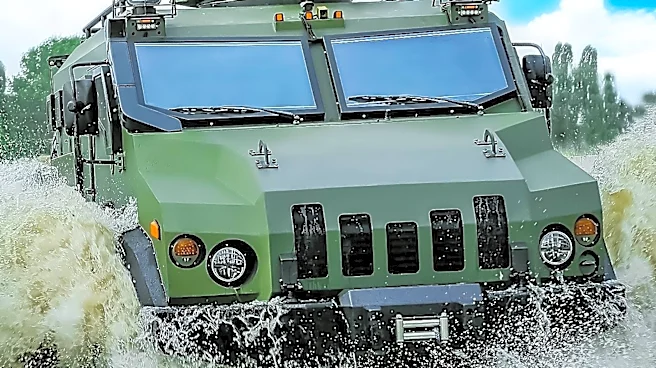
Rheinmetall, a German defense group, has received an order from Romania for an additional 66 Lynx combat vehicles, valued at €738 million. This order, announced on November 27, brings the total number of Lynx vehicles under Romania's existing framework
agreement to 298, following an initial order of 232 vehicles in May 2026. The Romanian fleet will primarily consist of infantry fighting vehicles, along with specialized variants for command, medical evacuation, and mortar support, with deliveries scheduled between 2028 and 2030. This procurement is part of Romania’s €5.7 billion defense package with Rheinmetall, financed through the European Union’s Security Action for Europe (SAFE) program. Concurrently, Rheinmetall revised its long-term financial outlook, now anticipating annual revenues of €33 billion to €37 billion by 2030, down from an earlier target of approximately €45 billion. This revision is attributed to setbacks in Germany’s F126 frigate program, payment delays for the Boxer vehicle program, and bottlenecks in ammunition procurement approvals.
Why It's Important?
This development highlights the increasing significance of Central and Southeast European defense procurement programs for major defense contractors like Rheinmetall. The substantial investment by Romania in modernizing its military, particularly through the acquisition of advanced combat vehicles, underscores a broader trend of enhanced defense spending within the European Union, partly driven by geopolitical considerations and initiatives like the SAFE program. For Rheinmetall, while the Romanian contract provides a significant boost to its order book and reinforces its industrial expansion in the region, the simultaneous downward revision of its 2030 revenue forecast indicates challenges in other key projects and procurement processes. This suggests that even leading defense companies face complexities in long-term financial planning due to project delays and regulatory hurdles, impacting their overall growth projections despite securing large contracts.
What's Next?
Rheinmetall plans to invest several hundred million euros to expand its manufacturing operations in Romania, involving over 200 subcontractors and creating thousands of jobs, alongside technology transfers. Its existing subsidiary, Rheinmetall Automecanica in Mediaș, will support the program. Deliveries of the 66 additional Lynx vehicles are slated between 2028 and 2030. The company will need to navigate the challenges that led to its revised revenue outlook, including addressing delays in the F126 frigate program and the Boxer vehicle program, as well as resolving bottlenecks in ammunition procurement approvals. The success of these efforts will be crucial for Rheinmetall to meet its adjusted financial targets and maintain its competitive position in the global defense market.
Beyond the Headlines
The Romanian order and Rheinmetall's revised outlook reflect the dynamic and often unpredictable nature of the global defense industry. The emphasis on expanding local manufacturing and technology transfer in Romania suggests a strategic move towards strengthening national defense industrial bases within the EU, fostering economic growth, and reducing reliance on external supply chains. However, the penalty imposed on Rheinmetall by Romania for delays in separate air defense equipment highlights the contractual complexities and potential risks involved in large-scale defense projects. This situation underscores the need for robust project management and clear contractual agreements to mitigate financial penalties and maintain trust between defense contractors and national governments, especially in a geopolitical climate that prioritizes defense capabilities.