




What's Happening?
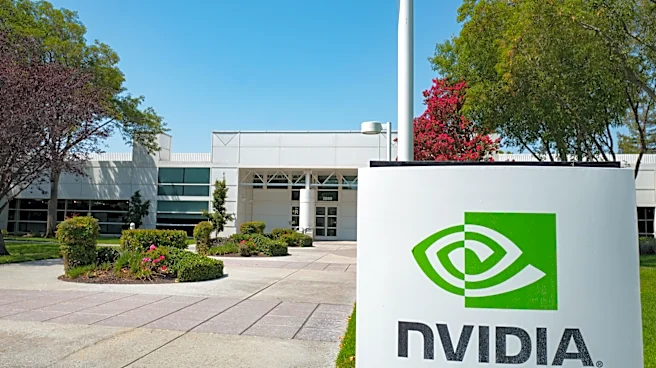
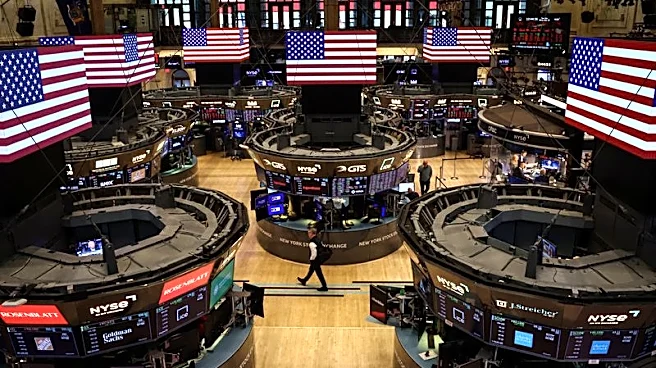
Hong Kong stocks experienced a sharp decline on Friday, with technology giants particularly affected by a global tech sell-off and concerns over potential U.S. restrictions on Chinese companies' access to Nvidia chips. The Hang Seng Index was down 1.6
percent, resulting in a 3.5 percent drop for the week. Alibaba was among the hardest hit, with its shares plunging almost 7 percent on Thursday and an additional 3.5 percent on Friday. Market analyst Timothy Pope noted that reports from Washington indicate the U.S. Commerce Department is preparing restrictions that could prevent Chinese companies from remotely accessing Nvidia chips through overseas data centers. This is a significant concern for Alibaba, which reportedly rents computing power from overseas providers for its AI development, as such restrictions could make this computing power much harder or more expensive to access, potentially complicating its international expansion plans.
Why It's Important?
The slide in Hong Kong stocks, particularly in the tech sector, underscores the profound impact of U.S. technology policy on Chinese companies and global markets. The potential U.S. restrictions on Chinese access to Nvidia chips are a critical development, as Nvidia is a leading supplier of high-performance chips essential for artificial intelligence development. For U.S. industries, these restrictions aim to curb China's technological advancement in AI, potentially safeguarding U.S. leadership in this strategic field. However, they also create uncertainty for U.S. chipmakers and data center providers that serve Chinese clients. For Chinese tech giants like Alibaba, such restrictions could significantly increase operational costs, hinder AI development, and impede international growth, forcing them to accelerate efforts towards domestic chip alternatives and self-sufficiency. This situation highlights the escalating tech rivalry and its direct financial consequences for major players.
What's Next?
The U.S. Commerce Department's anticipated restrictions on Chinese companies accessing Nvidia chips remotely will be a key development to watch. If implemented, these restrictions could force Chinese tech companies, including Alibaba, to re-evaluate their AI development strategies and potentially invest more heavily in domestic chip production and alternative computing solutions. This could lead to a further decoupling of the U.S. and Chinese tech ecosystems. Alibaba had already acknowledged the risk of such restrictions in earlier filings, indicating that it has been preparing for potential disruptions. The market will continue to react to any official announcements regarding these U.S. policies, and the performance of Hong Kong tech stocks will likely remain sensitive to geopolitical developments and the ongoing U.S.-China tech competition. Companies may also explore legal and diplomatic avenues to mitigate the impact of these restrictions.
Beyond the Headlines
The ongoing U.S. efforts to restrict China's access to advanced semiconductor technology, as evidenced by the potential Nvidia chip restrictions, represent a strategic move to control critical chokepoints in the global tech supply chain. This goes beyond economic competition, touching upon national security and geopolitical influence. Ethically, these restrictions raise questions about the fairness of using trade policy to impede technological progress in another nation, and the potential for unintended consequences on global innovation. Legally, the implementation of such restrictions will involve complex interpretations of export control laws and international trade agreements. Culturally, these actions reinforce a narrative of technological rivalry, potentially fostering a more insular approach to tech development in both countries. The long-term implication could be the emergence of two distinct technological spheres, each with its own standards, infrastructure, and innovation pathways, fundamentally reshaping the future of global technology.