


What's Happening?
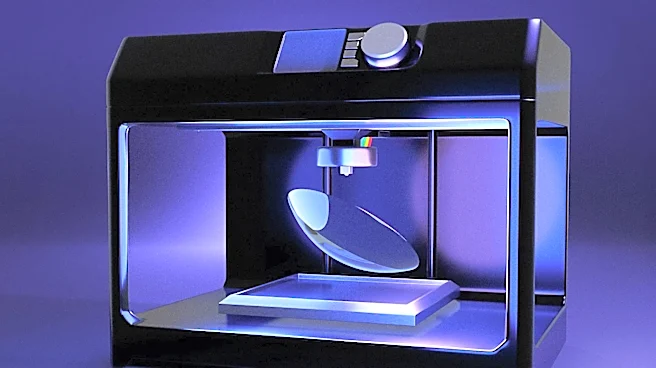
A mother in Gillette, Wyoming, is leveraging 3D printing technology to provide custom wheelchairs for her son, Colton Luraas, who suffers from a rare mitochondrial disease and genetic disorder. Standard wheelchairs are often expensive and quickly outgrown
by children. Colton's mom, Shay, discovered MakeGood, an organization that offers free files for 3D printed wheelchairs. A local family has stepped forward to cover the material costs, and the Area 59 makerspace in Gillette will be responsible for custom printing the wheelchairs for Colton. This collaborative effort aims to address the unique mobility needs of Colton, ensuring he has access to appropriately sized and affordable assistive devices.
Why It's Important?
This initiative highlights the innovative application of 3D printing technology to address critical healthcare needs, particularly for children with rare diseases. The high cost and rapid obsolescence of traditional medical equipment, like wheelchairs for growing children, pose significant financial and logistical burdens on families. By utilizing free 3D printing files and local community support, this project offers a cost-effective and customizable solution. It demonstrates how local makerspaces and community generosity can bridge gaps in healthcare access and provide personalized care that might otherwise be unattainable. This approach could serve as a model for other families facing similar challenges, showcasing the potential of open-source designs and local manufacturing in assistive technology.
What's Next?
The Area 59 makerspace will proceed with custom printing the wheelchairs for Colton Luraas, utilizing the free files from MakeGood and materials funded by a local family. This process will involve precise measurements and adjustments to ensure the wheelchairs are perfectly suited to Colton's needs as he grows. The success of this project could inspire further collaborations between families, makerspaces, and community donors to create more accessible and affordable assistive devices for individuals with disabilities. It may also encourage broader adoption of 3D printing in local healthcare solutions, particularly for custom medical equipment.
Beyond the Headlines
This story delves into the profound impact of community support and technological innovation on individual lives, particularly for those facing significant health challenges. The use of 3D printing for custom medical devices represents a paradigm shift in how assistive technology can be developed and distributed, moving towards more personalized, affordable, and locally produced solutions. It also underscores the power of open-source initiatives like MakeGood, which democratize access to essential designs. Beyond the immediate benefit to Colton, this effort fosters a sense of community resilience and highlights the ethical imperative to ensure equitable access to necessary medical equipment, especially for vulnerable populations.