








What's Happening?
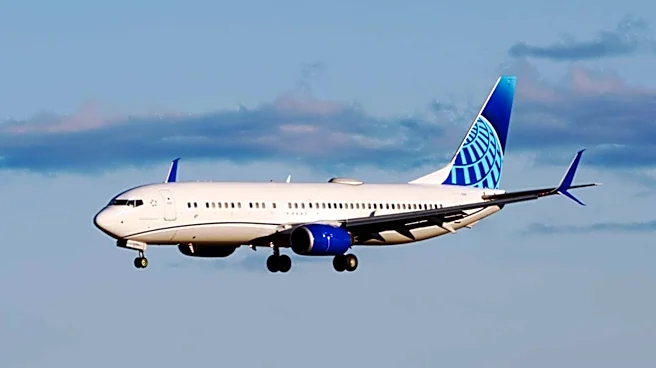
Scott Kirby, CEO of United Airlines, asserts that technology is the primary factor distinguishing United as the 'world's best airline.' While acknowledging that Asian and Middle Eastern carriers may surpass U.S. airlines in physical product and service,
Kirby argues that United's technological advancements provide a superior overall experience. He highlights the airline's use of technology for better travel management, clearer communication during disruptions, and enhanced onboard connectivity. As an example, he cited sending passengers radar maps during weather delays, which significantly improved customer satisfaction compared to standard delay notifications.
Why It's Important?
Kirby's emphasis on technology signals a strategic shift in how major U.S. airlines aim to compete in the global market. Rather than solely focusing on traditional metrics like luxurious seating or gourmet meals, United is prioritizing digital tools and connectivity to improve the passenger journey. This approach could redefine customer expectations for air travel, making seamless digital interactions and transparent communication as crucial as physical comfort. For the U.S. aviation industry, this focus on technology could drive further investment in IT infrastructure, AI-powered solutions, and digital customer service platforms, potentially creating a competitive advantage against international rivals and influencing how other airlines develop their service offerings.
What's Next?
United Airlines is likely to continue investing heavily in its technological capabilities, including AI for operational efficiency and customer communication. Other U.S. airlines may follow suit, accelerating the adoption of advanced digital solutions to remain competitive. This could lead to a more tech-driven passenger experience across the industry, with features like real-time updates, personalized services, and improved in-flight connectivity becoming standard. The success of United's strategy could also influence aircraft manufacturers to integrate more advanced digital systems into their designs, further blurring the lines between traditional airline services and technology offerings.
Beyond the Headlines
This strategic focus on technology by a major airline CEO reflects a broader trend of digital transformation impacting all industries. In aviation, it raises questions about the future of human interaction in customer service versus automated solutions. While technology can enhance efficiency and information flow, the balance between digital convenience and personalized service remains a critical consideration. Furthermore, the reliance on technology introduces new challenges, such as cybersecurity risks and the need for robust IT infrastructure, which will require continuous investment and adaptation. Ultimately, this shift could lead to a more resilient and responsive air travel ecosystem, but also one that is increasingly dependent on digital innovation.