







What's Happening?
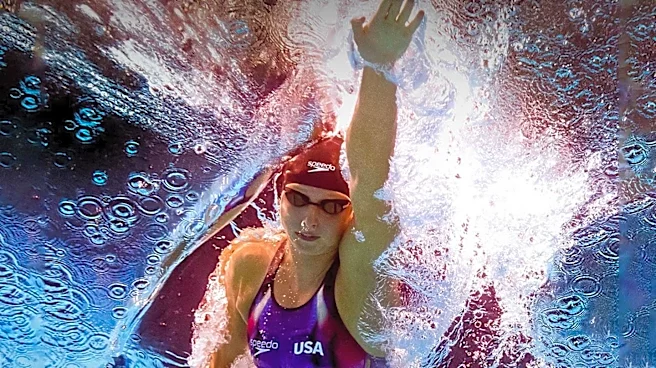
A recent article analyzing Halloween costumes for swimmers suggests that dressing as a vampire aligns with the dedication of a morning practice regular, drawing a parallel to Olympic swimmer Katie Ledecky. The piece, titled 'What Your Halloween Costume
Says About You as a Swimmer,' posits that individuals who embrace early morning training sessions, often before sunrise, share a similar commitment to Ledecky's intense practice schedule. Ledecky is recognized for her rigorous training, which has been instrumental in her success as a distance swimmer. The article playfully notes that while early mornings and long sets don't deter such swimmers, the prospect of an additional 800-meter swim at the end of practice might. This comparison is part of a broader lighthearted examination of how various Halloween costumes, from superheroes to zombies, could reflect different swimmer personalities and training styles.
Why It's Important?
This lighthearted analysis, while seemingly trivial, underscores the significant role of dedication and rigorous training in achieving elite athletic performance, particularly in sports like swimming. By associating a 'vampire' costume with Ledecky's training, the article subtly highlights the demanding lifestyle of professional athletes and the sacrifices required to reach the pinnacle of their sport. For aspiring swimmers and their coaches, it reinforces the idea that consistent, early-morning practices are often a cornerstone of success. Furthermore, it provides a relatable and engaging way for the swimming community to reflect on their own training habits and the personalities within their teams. The recognition of Ledecky in this context also solidifies her status as an icon whose work ethic is both admired and emulated within the sport.
What's Next?
While the article itself is a seasonal piece, its underlying message about the importance of consistent training will likely continue to resonate within the swimming community. Coaches may use such analogies to motivate their athletes, emphasizing the 'Ledecky-like' dedication required for improvement. For Ledecky herself, her continued performance in major competitions will further cement her legacy as a swimmer whose success is built on an unwavering commitment to her craft. The broader implication is that discussions around athlete training and dedication will persist, with Ledecky often serving as a prime example of what intense practice can achieve. Future analyses of athletic success will undoubtedly continue to reference her training methods as a benchmark.
Beyond the Headlines
The article touches upon a deeper cultural aspect of sports: the personification of athletic traits through popular archetypes. By linking swimmer personalities to Halloween costumes, it creates a relatable narrative that extends beyond the technicalities of the sport. The 'vampire' analogy for early risers, for instance, taps into a common understanding of dedication that transcends swimming. This approach helps demystify the elite athlete's routine, making it more accessible and understandable to a wider audience. It also subtly reinforces the idea that success in any demanding field often requires a willingness to embrace routines that might seem unconventional or challenging to others, highlighting the psychological and lifestyle commitments inherent in pursuing excellence.