






What's Happening?
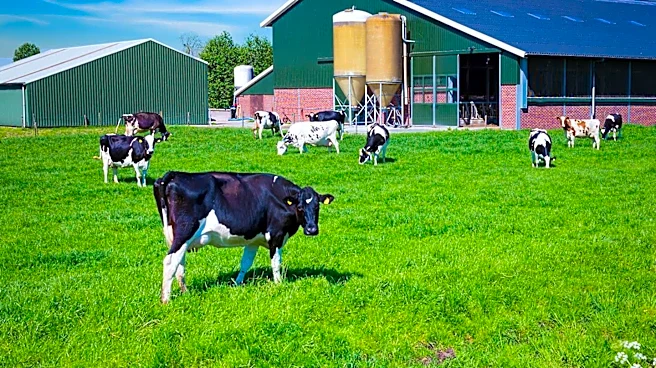
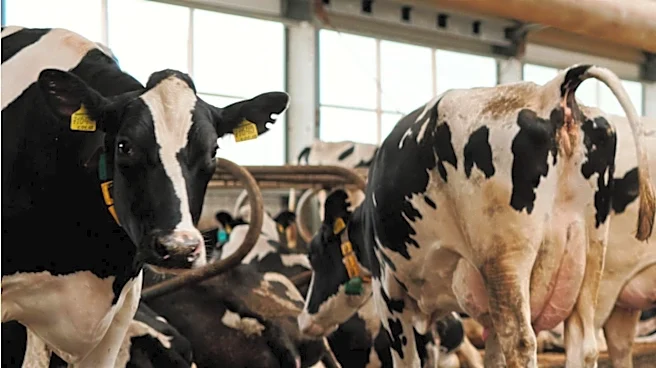
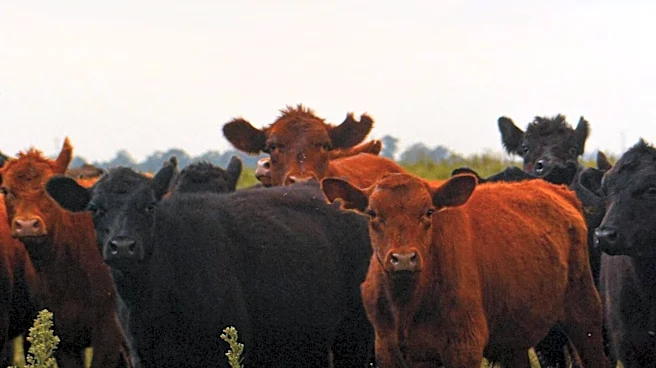
The U.S. Department of Agriculture's July Cattle Inventory report reveals a slight increase in the total cattle inventory, marking the first rise since 2018. As of July 1, 2026, the inventory of all cattle and calves in the U.S. reached 94.2 million head,
up by 200,000 from the previous year. Despite this increase, the beef cow herd has fallen to a record low of 28.5 million head, indicating that herd rebuilding is still limited. The report highlights a 3% increase in beef replacement heifers, suggesting potential for future herd rebuilding. However, the 2026 calf crop is estimated at 32.5 million head, the smallest on record, continuing a nine-year decline.
Why It's Important?
The stabilization of the cattle herd is significant for the U.S. beef industry, which has faced challenges due to declining herd sizes. The increase in beef replacement heifers offers a glimmer of hope for future herd expansion, which is crucial for meeting beef demand and stabilizing prices. The record low beef cow numbers, however, highlight ongoing challenges in herd rebuilding, which could impact beef supply and prices. The continued decline in the calf crop underscores the constraints on future herd growth, affecting the industry's ability to expand and meet market demands.
What's Next?
The report suggests that while there are signs of potential herd rebuilding, the process will be gradual. Strong cattle prices may encourage producers to retain more heifers for breeding, but the limited calf crop will constrain rapid expansion. The industry will need to navigate these challenges while balancing supply and demand to stabilize prices. Stakeholders will likely focus on strategies to support herd rebuilding and address the factors limiting growth, such as drought conditions and feed availability.