








What's Happening?
The European Union has introduced the Empowering Consumers for the Green Transition Directive (ECGT), also known as 'EmpCo,' a new law designed to combat greenwashing and protect consumers from misleading environmental claims. This directive, EU 2024/825,
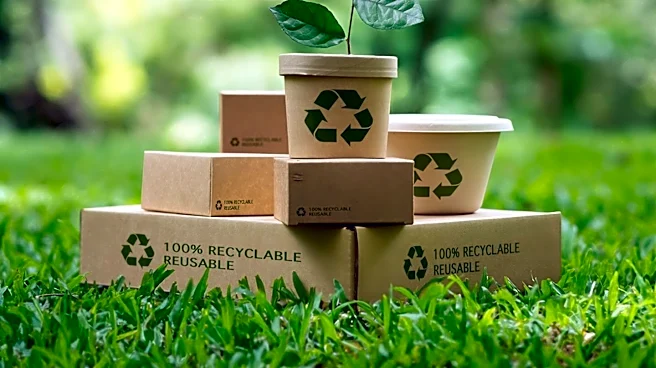
will apply to business-to-consumer communications across the EU and is set to come into full effect on September 27, 2026. Its primary goals are to safeguard consumers against unfair commercial practices, including greenwashing, premature product failure, and unreliable sustainability labels. Additionally, the ECGT aims to provide consumers with clear and trustworthy information regarding the environmental, social, and circular impacts of products and services. Under this directive, vague terms like 'eco-friendly,' 'green,' or 'carbon neutral' cannot be used unless businesses can demonstrate recognized excellent environmental performance, often through robust third-party certification. Claims about future environmental performance must also be backed by detailed, verified, and publicly available information.
Why It's Important?
This directive is crucial for the U.S. market and global businesses as it sets a precedent for stricter regulations on environmental marketing. While directly applicable in the EU, such comprehensive legislation often influences international standards and corporate practices, especially for companies operating globally. U.S. businesses that export to the EU or have a significant European consumer base will need to adapt their marketing and supply chain transparency to comply with these new rules. The prohibition of climate claims based solely on carbon offsets, and the requirement for claims to be based on actual product emissions, could significantly alter how companies approach their sustainability strategies and communications. This could lead to a global shift towards more verifiable and transparent environmental claims, impacting industries from manufacturing to retail and potentially increasing the cost of compliance for businesses worldwide.
What's Next?
As the ECGT Directive approaches its full implementation date of September 27, 2026, businesses, particularly those in the hospitality sector and those with international operations, are preparing for the changes. The directive will require companies to re-evaluate their environmental claims, ensuring they are substantiated by credible data and certifications. Many businesses will likely participate in webinars and workshops, such as those offered by organizations like The SRA, to understand how to navigate sustainability communications effectively in this 'post-greenwashing era.' The focus will be on transparency and accountability, utilizing robust frameworks to communicate environmental efforts credibly. Companies will need to invest in verifying their environmental performance and potentially adjust their product labeling and marketing strategies to avoid penalties and maintain consumer trust. The directive's impact could also spur the development of new certification schemes and auditing processes to meet the stringent requirements.
Beyond the Headlines
The ECGT Directive represents a significant step in redefining corporate responsibility regarding environmental claims. Beyond simply preventing misleading advertising, it aims to foster a more informed and empowered consumer base, capable of making genuine green choices. This could lead to a fundamental shift in consumer behavior, where skepticism towards vague 'green' labels is replaced by a demand for verifiable and transparent information. For businesses, this means that sustainability will increasingly become a core operational and strategic imperative, rather than just a marketing tool. The directive's emphasis on actual emissions and verifiable performance could also accelerate innovation in sustainable production methods and supply chain management. Furthermore, it highlights the growing global trend of regulatory bodies taking a more active role in combating corporate greenwashing, potentially leading to a more standardized and trustworthy landscape for environmental claims worldwide.