






What's Happening?
Walmart and Wing, a subsidiary of Alphabet Inc., are set to introduce drone delivery services across Los Angeles starting in 2027. This initiative is part of a broader expansion that aims to establish a network of over 270 drone delivery locations by
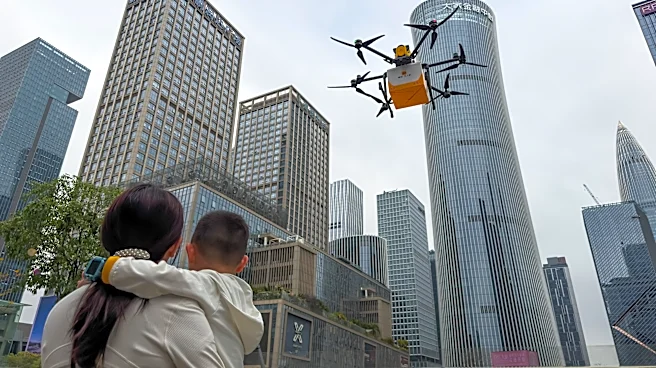
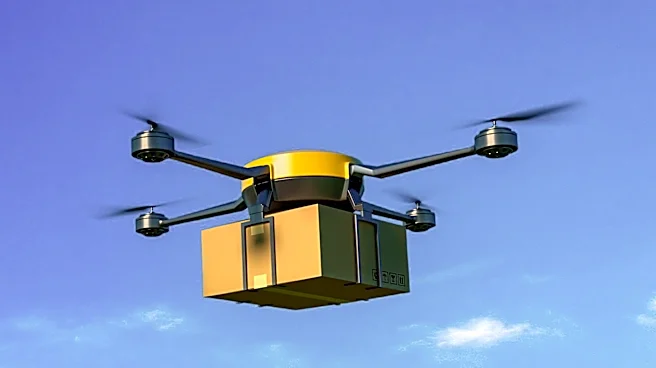
2027, extending from Los Angeles to Miami. The drones are capable of flying up to 12 miles at speeds of up to 60 mph and can deliver various small items, including hot coffee and food packages. The companies have already initiated drone deliveries in six other U.S. cities, such as Dallas, Atlanta, Charlotte, and Orlando, with their partnership beginning in 2023 with two Walmart Supercenters in Dallas. A demonstration of the drone delivery system was conducted in Los Angeles, showcasing the technology's capabilities.
Why It's Important?
This expansion signifies a significant advancement in last-mile delivery logistics and could reshape consumer expectations for speed and convenience in urban and suburban areas. For Walmart, it represents a strategic move to enhance its competitive edge against other retailers and e-commerce giants by offering ultra-fast delivery options. The partnership with Wing, a leader in drone technology, underscores the increasing integration of advanced robotics into retail operations. This development could also stimulate further investment and innovation in the drone delivery sector, potentially creating new jobs in technology, logistics, and maintenance. Consumers stand to gain from increased accessibility to goods and faster delivery times, particularly for urgent or small-item purchases. However, it also raises questions about airspace management, noise pollution, and the potential impact on traditional delivery jobs.
What's Next?
Following the 2027 launch in Los Angeles, Walmart and Wing plan to scale their ultra-fast service to an additional 150 Walmart stores over the next year, aiming to reach over 40 million Americans. The companies are also looking to introduce air services to other major U.S. cities, including St. Louis, Cincinnati, and Miami. This expansion suggests a phased rollout, with continuous evaluation and adaptation of the drone delivery model. Competitors like DoorDash have also announced their drone programs, indicating a growing trend in the delivery sector. Future developments will likely involve refining drone technology, optimizing delivery routes, and addressing regulatory challenges to ensure safe and efficient operations across diverse urban landscapes.
Beyond the Headlines
The widespread adoption of drone delivery services, as envisioned by Walmart and Wing, could have profound societal and environmental implications. On one hand, it offers a more sustainable delivery option by potentially reducing the carbon footprint associated with traditional vehicle-based deliveries, especially for short distances. On the other hand, the increased presence of drones in urban skies could lead to concerns about privacy, noise, and visual clutter. The legal and ethical frameworks governing drone operations will need to evolve rapidly to accommodate this new mode of commerce, addressing issues such as liability, airspace rights, and public acceptance. This shift could also accelerate the automation of logistics, prompting a reevaluation of labor markets and the skills required for future employment in the delivery sector.