




What's Happening?
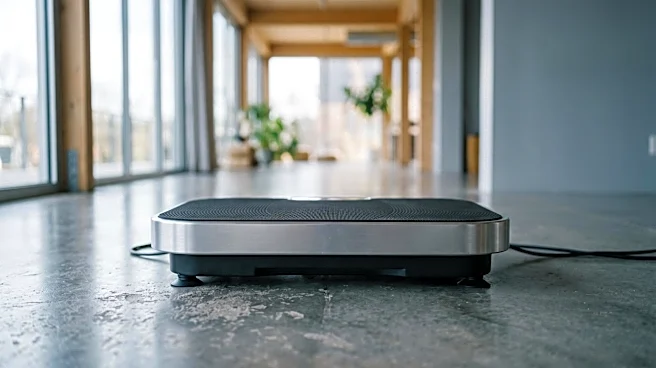
The Cleveland Clinic has provided an overview of vibration plates, a piece of exercise equipment that uses rapid vibrations to engage muscles. According to sports medicine specialist Dr. Lauren Wichman, these plates make exercises more challenging by
creating an unstable, oscillating surface, forcing muscles to contract to maintain balance. Potential benefits include improved flexibility and balance, muscle strengthening and toning, increased blood flow, and support for bone health. However, Dr. Wichman notes that while muscle contraction can lead to growth, it is unclear if vibration plates offer lasting effects comparable to traditional strength training. The U.S. Food and Drug Administration (FDA) has not approved these devices for treating injuries or other conditions, and more research is needed to confirm long-term benefits, particularly regarding blood circulation and bone mineral density.
Why It's Important?
This information from the Cleveland Clinic is important for U.S. consumers and the fitness industry as it provides a balanced perspective on a popular, yet not fully understood, exercise technology. With the market for home fitness equipment expanding, consumers are often exposed to various claims about new devices. The Cleveland Clinic's expert opinion helps to manage expectations, emphasizing that vibration plates may be a beneficial addition to a routine but are not a replacement for traditional cardiovascular exercise and strength training. This guidance can help individuals make informed decisions about their fitness investments and prevent potential misuse or over-reliance on unproven methods, thereby promoting safer and more effective exercise practices across the U.S.
What's Next?
Further research is needed to definitively establish the long-term efficacy and optimal usage parameters for vibration plates. Dr. Wichman highlights the lack of evidence regarding specific settings (frequency, amplitude, duration) required to achieve claimed benefits. This suggests that future studies will likely focus on controlled trials to compare vibration plate training with conventional exercise methods and to determine their specific physiological impacts. As more data becomes available, the FDA or other health organizations may issue more specific guidelines or recommendations. For consumers, it means continuing to approach these devices with caution and integrating them as a supplement to, rather than a substitute for, established fitness routines.
Beyond the Headlines
The discussion around vibration plates reflects a broader trend in the fitness industry where technological innovations are constantly introduced, often ahead of comprehensive scientific validation. This creates a challenge for consumers to discern effective tools from fads. The Cleveland Clinic's cautious yet open-minded approach underscores the importance of evidence-based health practices. It also highlights the role of medical professionals in guiding public understanding of fitness technologies. The ongoing need for research in this area points to the dynamic nature of exercise science and the continuous effort required to understand how new tools can genuinely contribute to health and wellness, rather than just offering novel experiences.