

What's Happening?
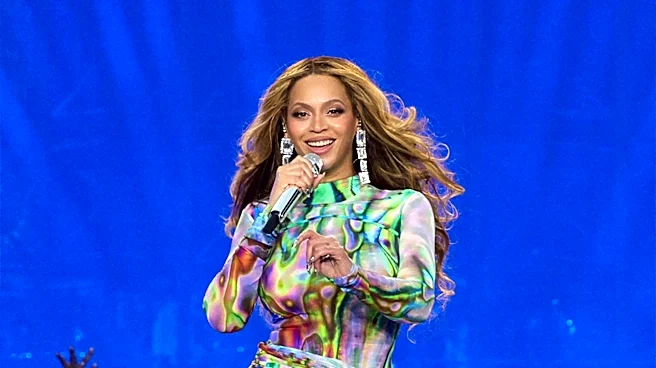
In 2007, Beyoncé performed her hit song 'Irreplaceable' on the TODAY show, incorporating Spanish lyrics from its translated version, 'Irreemplazable.' This performance took place on April 2, 2007, on the TODAY Plaza, a day before the deluxe edition of
her album 'B'Day,' which featured the Spanish version, was released. Beyoncé engaged the large crowd, initially performing an acoustic rendition in English before transitioning to Spanish for a significant portion of the song. She announced that the Spanish segment was specifically for her 'Latino fans,' demonstrating an intentional effort to connect with a broader audience. The Spanish lyrics, which differ slightly from the English original, convey a message of moving on from a past relationship, emphasizing finality and self-empowerment. The performance concluded with an energetic return to English for the chorus, met with enthusiastic cheers from the audience.
Why It's Important?
Beyoncé's decision to perform 'Irreplaceable' in Spanish on a major national platform like the TODAY show in 2007 was a significant moment for cultural representation in mainstream American music. It highlighted the growing influence and importance of the Hispanic and Latino demographic in the U.S. music market. By directly addressing her 'Latino fans' and performing in Spanish, Beyoncé not only expanded her artistic reach but also acknowledged and celebrated a diverse segment of her fanbase. This move could have encouraged other artists to consider bilingual performances or translations of their work, fostering greater inclusivity in the music industry. For the audience, it offered a unique and memorable experience, potentially introducing non-Spanish speakers to the beauty of the language through a familiar melody, while validating the cultural identity of Spanish-speaking listeners. This performance underscored the commercial and cultural benefits of embracing linguistic diversity in entertainment.
Beyond the Headlines
Beyoncé's bilingual performance on the TODAY show in 2007 can be seen as an early indicator of a broader trend in American popular culture towards greater linguistic and cultural inclusivity. This event transcended a mere musical performance; it was a cultural statement that recognized the evolving demographics of the United States. By integrating Spanish into her mainstream act, Beyoncé contributed to normalizing the presence of other languages in American media, challenging the traditional monolingual dominance. This act of cultural bridge-building could have subtly influenced perceptions of language and identity among her vast audience, promoting a more open and appreciative view of multiculturalism. It also showcased an artist's ability to adapt and innovate, using language as a tool to deepen connection with a global and diverse audience, setting a precedent for future artists navigating an increasingly interconnected world.