





What's Happening?
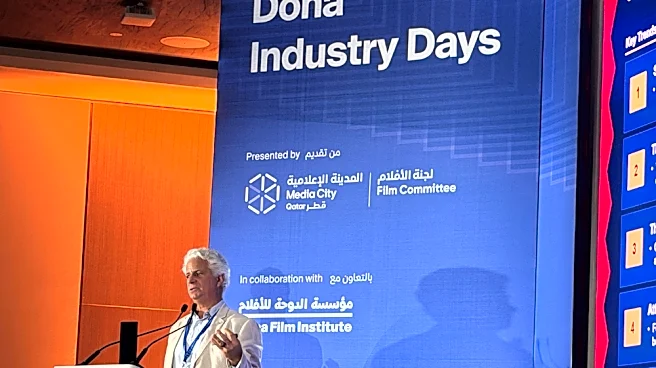
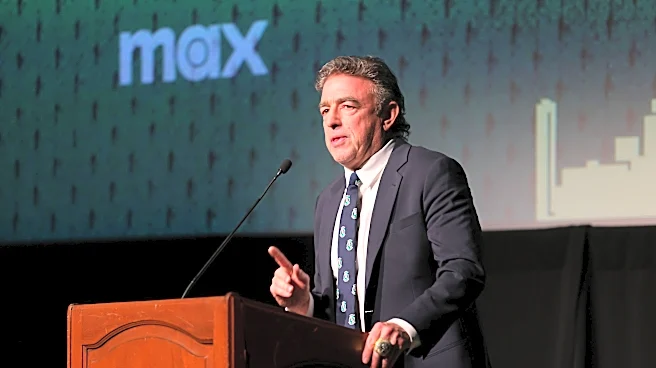
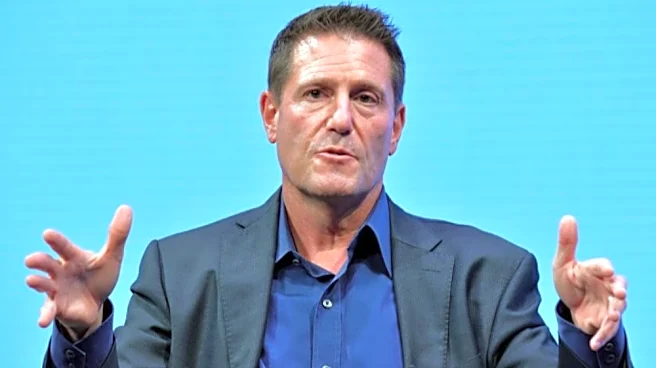
Candle Media co-founder Kevin Mayer recently stated that the company did not anticipate the sharp decline in demand for streaming content that impacted the industry in 2023. Speaking at an industry event in Doha, Mayer's comments came weeks after Candle Media finalized
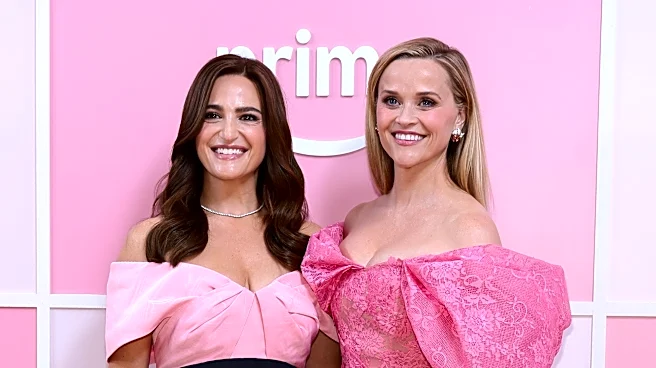
the sale of Hello Sunshine, a production company founded by Reese Witherspoon. Candle Media had acquired Hello Sunshine in 2021 for $900 million, but the resale price, though undisclosed, was reportedly several hundred million dollars lower than the initial investment. Mayer acknowledged that while they made a significant effort with live-action assets like Hello Sunshine, the outcome was not as desired, leading to its recent sale. He highlighted that the company's initial strategy was based on two main assumptions: that studios entering the streaming market would create a demand for independent producers' content, and that the demand for high-quality content would continue to grow annually by double digits. However, the latter assumption proved incorrect, with streaming content demand shrinking by approximately 35% below its 2022 peak.
Why It's Important?
This development is important for the U.S. entertainment industry, particularly for streaming services and content production companies. The unexpected contraction in streaming content demand, contrary to earlier projections of double-digit growth, signals a significant shift in market dynamics. This could lead to a re-evaluation of investment strategies in content acquisition and production across the industry. Companies that heavily invested in content libraries based on previous growth forecasts may face financial challenges, as evidenced by Candle Media's sale of Hello Sunshine at a reported loss. The success of Moonbug, a children's media company acquired by Candle Media, suggests that specific niches, particularly those with strong cross-platform intellectual property (IP) strategies, may still thrive. This indicates a potential pivot for investors and producers towards more targeted content strategies and a greater emphasis on IP that can successfully transition across various media formats, from social media to traditional television and film.
What's Next?
The U.S. streaming and content production landscape is likely to see continued adjustments in response to the revised market realities. Companies may become more cautious with large-scale acquisitions and focus on optimizing existing content portfolios. There could be an increased emphasis on data-driven content creation and a shift towards intellectual property that demonstrates proven cross-platform appeal, similar to Moonbug's success with titles like CoComelon. Industry stakeholders, including investors and production houses, will likely scrutinize content investment models more closely, prioritizing profitability and audience engagement over sheer volume. This could also lead to further consolidation within the industry as companies seek to streamline operations and leverage successful IP more effectively. The long-term impact may include a more diversified content ecosystem, with a stronger focus on niche markets and multi-platform distribution strategies.
Beyond the Headlines
The challenges faced by Candle Media and the broader streaming industry highlight a deeper re-evaluation of the 'content is king' mantra that dominated the early years of the streaming boom. The assumption that demand for high-quality content would perpetually increase at double-digit rates proved unsustainable, revealing a potential overvaluation of content assets and an underestimation of market saturation. This shift could trigger a more disciplined approach to content valuation and a greater emphasis on sustainable business models rather than growth at all costs. It also underscores the evolving nature of audience consumption habits, with a clear distinction emerging between content that successfully translates across platforms (like Moonbug's children's programming) and traditional film/TV content that struggles to gain traction on social media. This suggests a need for a more integrated and flexible approach to content development, where the medium and audience engagement are considered from the outset, rather than simply adapting existing content to new platforms.