




What's Happening?
Gardening experts across various U.S. university extension services and long-standing horticultural publications are consistently advising home gardeners against the common practice of daily, shallow watering. This method, often perceived as beneficial,
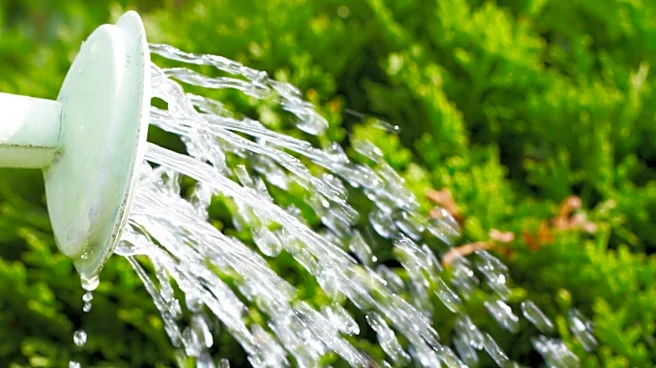
is actually detrimental to plant health. Institutions like Purdue Extension, the University of Maryland Extension, and Iowa State University Extension, along with The Old Farmer's Almanac, emphasize that frequent, light watering only moistens the top layer of soil. This encourages plants to develop shallow root systems, making them highly susceptible to drying out quickly, especially during hot weather or periods of neglect. The consensus among these experts is that roots do not actively 'seek out' water deeper in the soil but rather grow only where moisture and oxygen are already present. Therefore, shallow watering restricts root development to the surface, creating a dependent and vulnerable plant.
Why It's Important?
This widespread gardening misconception has significant implications for water conservation and plant resilience across U.S. households and agricultural practices. Daily shallow watering leads to inefficient water use, as a substantial portion is lost to evaporation from the surface. The EPA's WaterSense program indicates that roughly half of all outdoor water use is wasted due to overwatering, evaporation, and runoff. By promoting shallow root systems, this practice also makes plants less drought-tolerant and more reliant on constant human intervention, increasing the workload for gardeners and potentially leading to plant loss during absences. Adopting the recommended deep, infrequent watering method can foster stronger, more self-sufficient plants, reducing water consumption and enhancing garden sustainability. This shift in practice can save time, conserve resources, and result in healthier, more robust plant life, benefiting both individual gardeners and broader environmental efforts.
What's Next?
To rectify this common error, gardening experts recommend watering deeply and less often, typically two to three times a week, aiming for a total of 1 to 1.5 inches (2.5 to 4 cm) of water per week. The goal is to wet the soil down to about 6 inches (15 cm), which can be checked using a simple tool like a screwdriver. Watering should ideally occur in the early morning to minimize evaporation and prevent fungal diseases that can arise from wet leaves overnight. By consistently applying this deep watering technique for a few weeks, plants will develop deeper root systems, allowing them to access moisture further down in the soil. This adaptation will enable plants to better withstand heat waves and periods without watering, leading to a more resilient and less demanding garden. The long-term outcome is healthier plants that require less frequent attention and are more capable of surviving environmental stressors.
Beyond the Headlines
The persistence of the 'daily shallow watering' myth highlights a broader challenge in disseminating accurate scientific information to the public, even in practical fields like gardening. The idea that roots 'search' for water is a deeply ingrained folk myth, often passed down through generations, despite scientific evidence to the contrary. This situation underscores the importance of cooperative extension services and educational outreach programs from universities, which are dedicated to testing and sharing evidence-based practices. The disconnect between common belief and scientific understanding can lead to inefficient resource use and suboptimal outcomes. By understanding the actual mechanics of root growth and water absorption, gardeners can move beyond anecdotal advice and adopt methods that are not only more effective but also more sustainable, contributing to a more informed and environmentally conscious approach to horticulture.