




What's Happening?
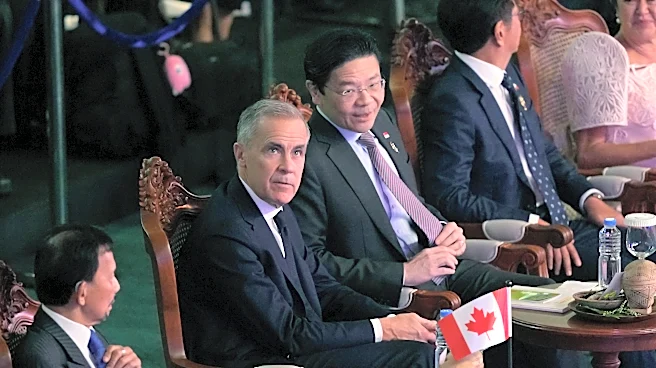
Canadian Prime Minister Mark Carney indicated that Canada might explore partnerships with Chinese automakers if trade negotiations with President Trump fail to maintain an integrated North American auto industry. Carney's comments were made in Cambodia
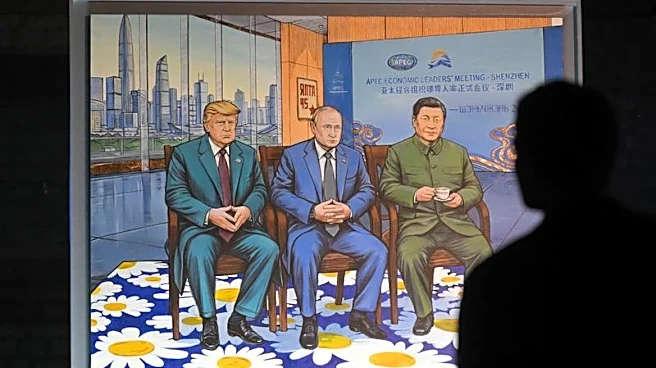
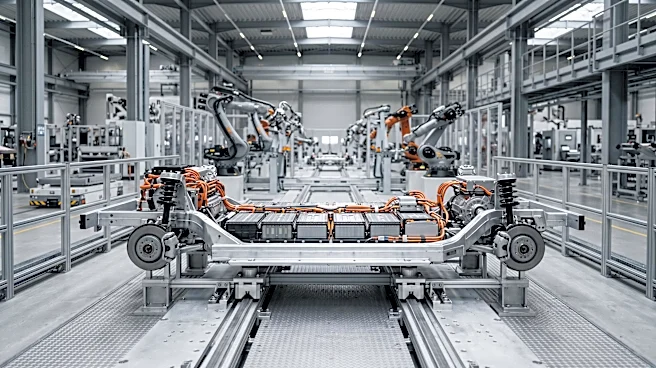
ahead of a planned meeting with Chinese leader Xi Jinping in Shenzhen, China, where auto manufacturing is expected to be a key discussion point. In January, Canada and China reached an agreement that reduced Canada's tariff on Chinese electric vehicles from 100% to 6.1%, allowing up to 49,000 vehicles annually, with the cap increasing over time. In return, China agreed to lower tariffs on Canadian agricultural products. Carney emphasized that while negotiations with the U.S. remain a priority, Canada is prepared to pursue alternatives with European, Chinese, or Japanese automakers if necessary to ensure a viable auto industry. He stressed that any Chinese investment would require substantial manufacturing in Canada, including proper labor standards, facilities, and domestic supply chains utilizing Canadian critical minerals.
Why It's Important?
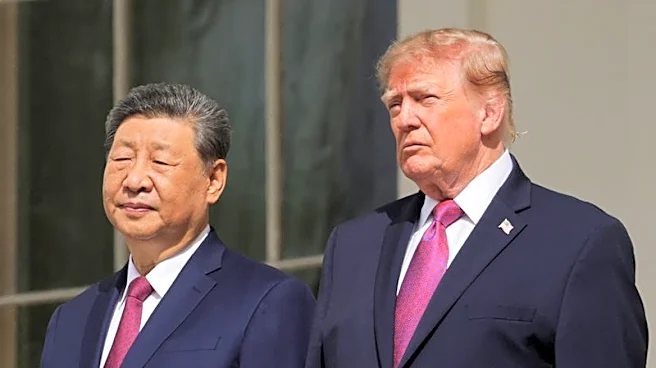
This development is significant for the U.S. auto industry and trade relations. President Trump has consistently advocated for moving auto production to the U.S., leading to trade actions that have impacted the integrated North American auto market. If Canada diversifies its auto industry partnerships towards China, it could weaken the long-standing economic ties within North America and potentially shift global automotive supply chains. For U.S. automakers like Ford, General Motors, and Stellantis, which operate extensively across Canada, the U.S., and Mexico, such a shift could introduce new complexities and competitive pressures. It also highlights the potential for geopolitical tensions to influence economic decisions, as Canada seeks to protect its auto sector jobs and economic interests in the face of U.S. trade policies. The move could also accelerate the adoption of Chinese electric vehicle technology in North America, posing a challenge to U.S. manufacturers.
What's Next?
The immediate next steps involve ongoing trade negotiations between Canada and the U.S. The outcome of these discussions will largely determine Canada's future strategy regarding its auto industry. If a satisfactory agreement with the U.S. is not reached, Canada is likely to intensify its engagement with Chinese, European, and Japanese automakers to secure investments and manufacturing capabilities within its borders. This could lead to increased foreign direct investment in Canada's automotive sector, particularly in electric vehicle production and critical mineral supply chains. The Canadian government will likely focus on ensuring that any new partnerships include significant local manufacturing and job creation. Conversely, if a trade agreement with the U.S. is successful, Canada may prioritize strengthening its existing North American auto industry ties, potentially reducing the urgency to seek alternative partners.
Beyond the Headlines
This situation underscores the broader geopolitical and economic shifts occurring in the global automotive industry, particularly concerning electric vehicles. The push for local manufacturing and secure supply chains, especially for critical minerals, reflects a growing trend towards economic nationalism and strategic independence. Canada's stance highlights the delicate balance countries must strike between maintaining traditional alliances and exploring new economic opportunities in a rapidly changing global landscape. The ethical implications revolve around labor standards and environmental practices in potential new partnerships, as Canada has emphasized these aspects. Culturally, a greater presence of Chinese automakers in Canada could lead to increased technological exchange and influence, potentially reshaping consumer preferences and industry norms in the North American market over the long term.