








What's Happening?
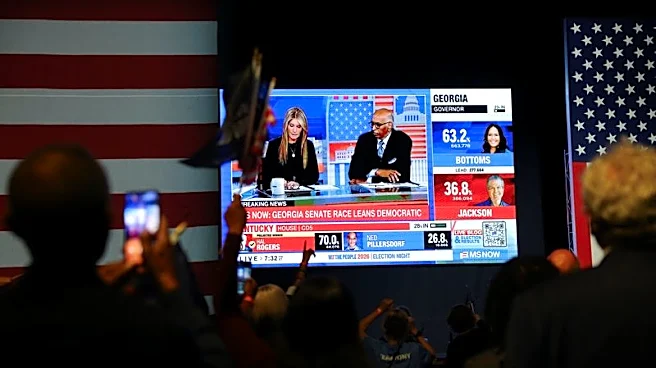
The financial markets are reacting to the 2026 midterm election results, which indicate that Democrats are poised to control both the House and Senate, leading to a divided government for the remainder of President Trump's term. This outcome has surprised
many investors, prompting a reassessment of the legislative outlook, government spending, and inflation. The initial market response on November 4, 2026, included gains in both stocks and bonds. For mortgage rates, the bond market's performance is particularly significant. Mortgages are typically packaged into mortgage-backed securities, or mortgage bonds. An increase in demand for these investments generally leads to higher prices and lower yields, which can enable lenders to offer more favorable mortgage pricing. The 10-year Treasury yield, which often moves in tandem with mortgage rates, is also a key indicator. While a bond rally can improve financing conditions, individual mortgage rates are also influenced by factors such as credit score, loan type, and down payment.
Why It's Important?
The early market reaction to the 2026 election results holds significant implications for U.S. homebuyers and homeowners. A sustained rally in mortgage bonds could translate into more favorable financing opportunities, potentially making homeownership more accessible or refinancing more attractive. This development is crucial in the broader context of housing affordability, which is also shaped by home prices, inventory levels, construction costs, and income levels. For potential buyers, lower mortgage rates could reduce monthly payments, while homeowners considering refinancing might find better terms. The market's positive response is attributed to reduced election uncertainty, as President Trump's acceptance of the results provided clarity. Additionally, the prospect of a divided government suggests that major legislation, such as large spending packages or tax changes, may face a more challenging path, which some investors view as a source of predictability. This perceived stability can influence investor confidence and, consequently, bond market performance.
What's Next?
The sustainability of the current bond market rally and its impact on mortgage rates will depend on several upcoming developments. Future employment reports, which detail job growth, wages, and unemployment, will offer insights into the economy's strength. Inflation data, including consumer prices and other measures, will help investors assess whether price pressures are easing. Guidance from the Federal Reserve regarding monetary policy will also influence financial markets, although the Fed does not directly set mortgage rates. Furthermore, actual policy decisions on spending, taxes, trade, and foreign policy will carry more weight than current speculation. The initial market reaction is not always the final one, and incoming economic data will be critical in determining whether investors maintain or adjust their current expectations. Homebuyers and homeowners are advised to monitor these indicators and consult with mortgage loan officers to understand how changing market conditions might affect their individual situations.
Beyond the Headlines
The market's positive reaction to a divided government outcome highlights a deeper investor preference for predictability and potentially slower legislative change. This suggests that financial markets may view political gridlock as a stabilizing force, reducing the likelihood of radical policy shifts that could introduce economic uncertainty. The focus on potential changes to inflation pressures, particularly concerning trade policy and international conflicts, underscores the interconnectedness of global events and domestic economic conditions. Any developments that could ease tariff pressures or stabilize energy prices are closely watched by investors due to their direct impact on inflation. This situation also brings to light the complex interplay between political outcomes, investor psychology, and the real estate market, demonstrating how perceived political stability can translate into tangible benefits for consumers through lower borrowing costs. The emphasis on 'what actually happened' versus 'what was expected' in market reactions also illustrates the sophisticated nature of financial forecasting and the constant recalibration of investor strategies.