
What's Happening?
Konnor Griffin, a player for the Pittsburgh Pirates, has received a significant endorsement from Jim Callis of MLB.com, who ranked him as having the highest future value among 2026 rookies. This endorsement comes despite Griffin's rookie season being
impacted by injuries, including a forearm strain and a torn finger tendon, which limited him to a .272/.324/.404 line with six homers and 23 steals. Callis highlighted that if Griffin's production were extrapolated over a full season, he would have been the first player aged 20 or younger since Mike Trout to achieve a .272 batting average with 12 home runs and 43 stolen bases. Griffin also showed strong performance in May, hitting .306/.361/.459, and finished the 2026 campaign with a .348/.388/.543 line over his last 11 games, indicating his potential. The Pirates had previously signed Griffin to a nine-year, $140 million extension in April.
Why It's Important?
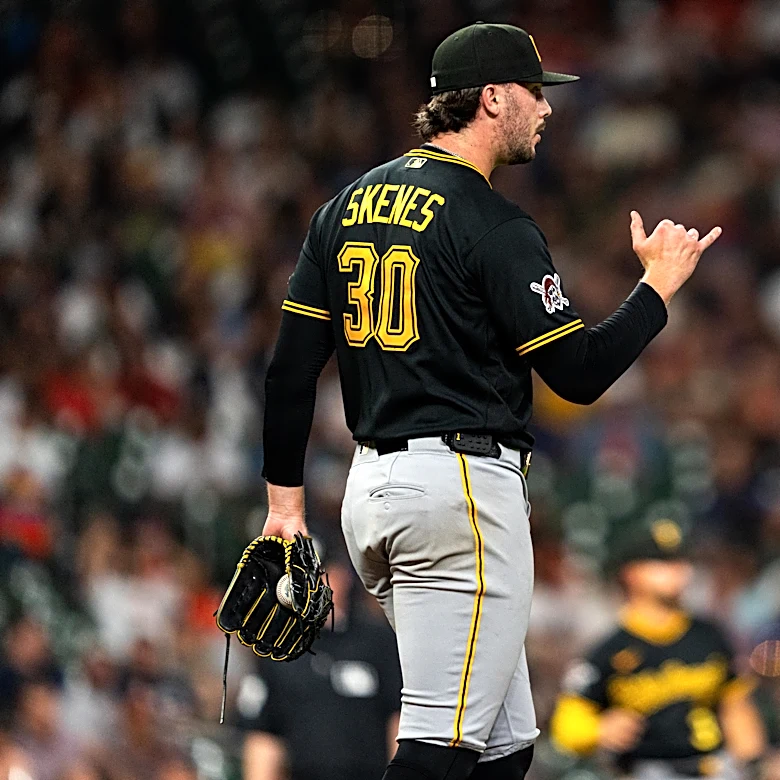
This endorsement of Konnor Griffin's future value is crucial for the Pittsburgh Pirates as it reinforces the team's decision to invest heavily in him and signals a potential shift in their competitive outlook. The comparison to Mike Trout, a generational talent, underscores the high expectations surrounding Griffin and suggests he could be a cornerstone player for the franchise. For the Pirates, who finished 2026 without making the postseason, Griffin's development is seen as key to opening a window of contention. The team's current roster, which includes Oneil Cruz, Bryan Reynolds, and promising pitchers like Braxton Ashcraft and Paul Skenes, is considered 'pretty good,' but the article emphasizes that 'pretty good isn't good enough.' Maximizing Griffin's value necessitates additional strategic acquisitions to transform the team into a legitimate playoff contender, impacting the team's financial and strategic decisions in the upcoming offseason.
What's Next?
The Pittsburgh Pirates are now faced with the imperative to build a stronger team around Konnor Griffin to capitalize on his immense talent and the open window of contention. The team has identified several needs, including a second baseman, a right-handed power bat, and a left-handed starter. Addressing these deficiencies through offseason acquisitions will be critical to avoid squandering Griffin's potential and to prevent the playoff drought from continuing. The clock is ticking for the Pirates, as key players like Oneil Cruz will soon require extensions, and others like Ryan O'Hearn are entering the final year of their deals. Failure to make significant moves could lead to difficult choices as the core players become more expensive. The team's ability to add firepower and make smart long-term decisions will determine if they can translate Griffin's individual brilliance into team success in 2027 and beyond.
Beyond the Headlines
The situation with Konnor Griffin and the Pittsburgh Pirates highlights a broader challenge in professional sports: how to effectively build a winning team around a generational talent. While individual superstars can elevate a team's floor, baseball's structure means one player cannot carry a subpar roster to the playoffs alone, unlike in some other sports. This scenario brings into focus the ethical and strategic responsibilities of team management to invest adequately in supporting talent. The Pirates' long-term extension with Griffin demonstrates a commitment, but the subsequent need for further roster improvements underscores that a single star, no matter how bright, requires a robust supporting cast. The pressure on the Pirates to 'go all-in' reflects the fleeting nature of competitive windows in sports and the potential for squandering valuable assets if not properly leveraged. This situation could serve as a case study for other franchises on the delicate balance between player development, strategic acquisitions, and financial management.