




What's Happening?
François Chollet, co-founder of Keras, has issued a warning regarding a potential “funding bubble” in the artificial intelligence (AI) sector, distinct from the technology itself. According to a recent post on November 22, Chollet highlighted the significant
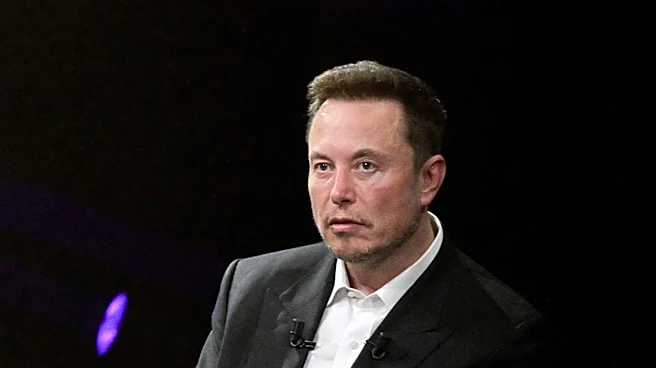
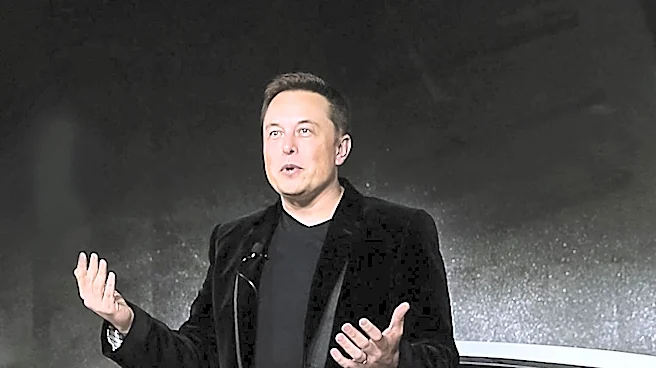
challenges and costs associated with maintaining AI data centers, specifically mentioning the difficulties in power supply, cooling, and stable operations. He estimates that if there is a delay of several months between purchasing computing power and generating stable revenue, the entire industry could face an additional cash requirement of hundreds of billions of U.S. dollars. This situation, he predicts, will lead to a severe cash shortage in the coming year. This perspective aligns with recent warnings from Elon Musk on X, who has cautioned that the bond market is increasingly reluctant to lend to AI data center companies without substantial revenue streams outside of AI. Musk suggested that over 200 such companies could face a “guppy-level death,” leading to closures or mergers.
Why It's Important?
This warning from a prominent figure in the AI community like François Chollet carries significant weight for the U.S. technology and financial sectors. A potential funding bubble burst in AI could lead to a substantial shake-up, particularly affecting startups and companies heavily reliant on external investment for their data center operations. The predicted cash shortage could force many AI data center companies, especially those without diversified revenue, into bankruptcy or consolidation. This would impact investors who have poured capital into these ventures, potentially leading to significant losses. Furthermore, it could slow down the pace of AI development and deployment if companies struggle to secure the necessary infrastructure and operational funding. The U.S. economy, which has seen considerable investment and growth in the AI sector, could experience a ripple effect, impacting job creation and technological innovation. The emphasis on the operational costs of AI infrastructure underscores a critical, often overlooked, aspect of the AI boom.
What's Next?
In the immediate future, the AI industry may see increased scrutiny from investors and lenders, particularly towards companies with high operational costs and unproven revenue models. Companies that can demonstrate stable revenue streams and efficient management of their computing infrastructure will likely be better positioned to weather the anticipated cash crunch. Conversely, those heavily dependent on speculative funding for data center expansion could face severe financial difficulties, potentially leading to a wave of mergers, acquisitions, or bankruptcies in the coming year. This situation could also prompt a shift in investment strategies, with a greater focus on profitability and sustainable business models rather than rapid, unfunded expansion. Regulatory bodies might also begin to examine the financial stability of the AI sector more closely, especially if the predicted cash shortage materializes and impacts the broader economy.
Beyond the Headlines
The concerns raised by François Chollet highlight a deeper issue within the rapid expansion of the AI industry: the disconnect between technological promise and economic reality. While the demand for AI technology is genuine, the financial models supporting its infrastructure, particularly data centers, may be unsustainable in the long run without robust, independent revenue. This situation could lead to a re-evaluation of how AI companies are valued and funded, shifting away from purely growth-oriented metrics to those emphasizing operational efficiency and profitability. It also brings to light the environmental and logistical challenges of AI, such as the immense power and cooling requirements, which contribute to the high operational costs. This could spur innovation in more energy-efficient AI hardware and data center designs, or lead to a more centralized, shared infrastructure model to reduce individual company burdens. The ethical implications of a potential industry consolidation, where only the largest and most well-funded players survive, also warrant consideration, as it could limit diversity and competition in AI development.