







What's Happening?
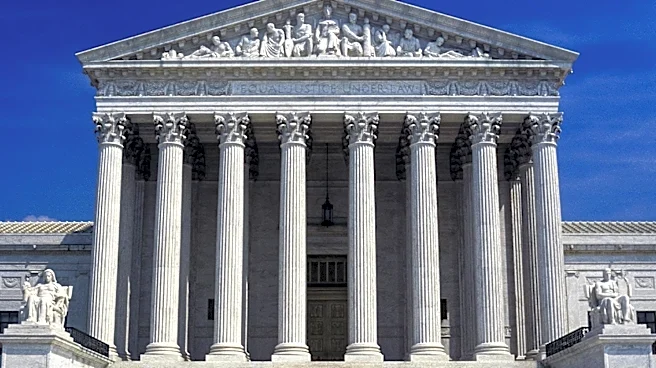
Prediction market platform Robinhood has asked the Supreme Court (SCOTUS) to postpone granting certiorari in a case concerning states' rights to enforce gambling laws against sports event contracts. This request follows a 3-0 ruling by the Ninth Circuit
Court of Appeals that supported state authority. Robinhood argues that granting certiorari now would be "premature" because the Commodity Futures Trading Commission (CFTC) is currently finalizing new rules on sports contracts. The CFTC's revised rules, which will provide guidance on how to categorize and regulate these contracts, are not expected until late this year or early 2027. Robinhood believes the forthcoming CFTC rule will offer significant clarity to courts, market participants, and state regulators, making a Supreme Court review more appropriate after the rules are established.
Why It's Important?
This legal maneuver by Robinhood highlights the ongoing regulatory uncertainty surrounding prediction markets, particularly those related to sports outcomes. The outcome of this case and the CFTC's rulemaking will have significant implications for the legality and operation of prediction market platforms across the U.S. A definitive federal framework from the CFTC could either legitimize or severely restrict these markets, impacting their business models and accessibility for users. The delay sought by Robinhood aims to ensure that any Supreme Court decision is informed by a clear regulatory landscape, potentially preventing conflicting rulings or premature judgments that could further complicate the industry's future. The involvement of state and tribal gaming authorities, who are expected to challenge the CFTC's rules, further underscores the complex legal battle ahead.
What's Next?
If SCOTUS agrees to Robinhood's request, the earliest it would likely hear one or more prediction market cases would be pushed back until mid-2027, or potentially even 2028, given the anticipated legal challenges to the CFTC's new rules. The CFTC's formal Notice of Proposed Rulemaking on sports contracts has concluded its public comment phase, and the agency is now in the process of establishing its final rules. Legal experts anticipate that states and tribes will likely file Administrative Procedure Act (APA) lawsuits challenging the CFTC's eventual guidance, regardless of its content. This suggests a prolonged legal battle, with the Supreme Court potentially waiting for these challenges to play out before intervening.
Beyond the Headlines
The debate over prediction markets touches on fundamental questions of federal versus state authority, the definition of gambling versus financial instruments, and the role of technology in creating new forms of commerce and entertainment. The CFTC's efforts to regulate these markets reflect a broader challenge faced by regulators in keeping pace with rapidly evolving digital platforms. The potential for a Supreme Court showdown, even if delayed, signifies the high stakes involved for both the prediction market industry and traditional gaming sectors. The eventual resolution could establish precedents for how novel financial products and digital platforms are regulated in the U.S., influencing innovation and consumer access in this emerging space. The legal complexities also highlight the need for clear, consistent regulatory frameworks to foster responsible growth while protecting consumers.