




What's Happening?
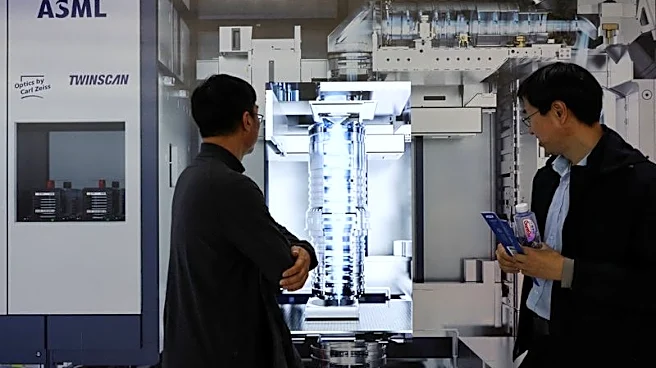
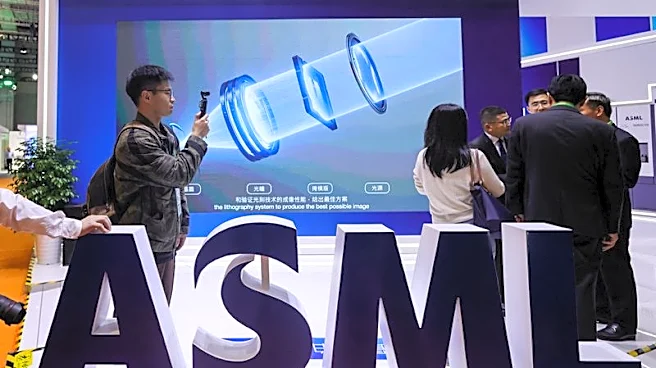
ASML CEO Christophe Fouquet has expressed increasing concern regarding the potential unintended consequences of tighter U.S. export controls on China, particularly as the U.S. considers incorporating the MATCH Act into its defense bill. Fouquet's primary
worry is not immediate financial impact, which ASML might absorb due to strong AI-driven equipment demand elsewhere, but rather the structural implications for the competitive dynamics of lithography technology. The MATCH Act faces significant Dutch opposition, and its implementation would require U.S. legislation and international coordination. Fouquet highlights the distinct competitive risks for ASML's Extreme Ultraviolet (EUV) and immersion Deep Ultraviolet (DUV) technologies. EUV is described as an ecosystem monopoly, built on decades of innovation across a specialized supply chain involving U.S., German, and ASML's own expertise, creating high barriers to entry. In contrast, immersion DUV is an established technology with another supplier, Nikon, and China already possesses a substantial number of ASML immersion scanners and has demonstrated 7nm production without EUV. China has also reportedly begun domestic immersion scanner production through Shanghai Aishengna, though bottlenecks in optics, lasers, photoresists, and precision engineering remain.
Why It's Important?
The U.S. push for tighter export controls, exemplified by the potential MATCH Act, carries significant implications for the global semiconductor industry and U.S. technological leadership. While these controls aim to slow China's technological advancement, ASML's CEO suggests they could inadvertently accelerate China's development of a parallel lithography ecosystem. By restricting access to advanced Western technology, the U.S. policy creates captive demand for domestic alternatives within China, incentivizing Chinese fabs to risk using domestic scanners. This shift could lower the commercial barrier to entry for Chinese suppliers, even if the technological barrier remains high. The long-term risk is the emergence of a self-sufficient Chinese semiconductor industry, potentially reducing reliance on Western technology and impacting the market share of companies like ASML. The debate centers on whether the near-term strategic benefits of restricting China outweigh the longer-term risk of fostering a competitive, independent Chinese lithography sector.
What's Next?
The future trajectory of U.S. export controls on China's semiconductor industry hinges on the potential incorporation of the MATCH Act into the U.S. defense bill and the subsequent international coordination and enforcement. The Dutch opposition to the MATCH Act indicates potential diplomatic challenges in achieving a unified front on these restrictions. If tighter controls are implemented, ASML and other Western semiconductor equipment manufacturers may face continued pressure to balance their global market access with compliance. China is likely to intensify its efforts to overcome remaining bottlenecks in its domestic immersion DUV production, focusing on optics, lasers, photoresists, and precision engineering. The development of China's experimental EUV prototype, with a target for first chips by 2028 or 2030, will be a critical indicator of its progress in establishing an independent, advanced semiconductor manufacturing capability.
Beyond the Headlines
The ongoing tension between U.S. export controls and China's technological ambitions highlights a broader geopolitical struggle for dominance in critical technologies. This situation raises ethical questions about the balance between national security interests and the free flow of technology and innovation. The unintended consequence of fostering a parallel, independent lithography ecosystem in China could lead to a more fragmented global semiconductor market, potentially increasing costs and reducing efficiency in the long run. Furthermore, the reliance on a highly specialized global supply chain for advanced technologies like EUV, involving companies from the U.S., Germany, and the Netherlands, underscores the interconnectedness of the modern tech industry. Any disruption to this delicate balance, whether through export controls or geopolitical tensions, can have far-reaching implications for global technological progress and economic stability.