



What's Happening?
College students are increasingly focusing on personalizing their dorm rooms, moving away from traditional, bare-bones setups. Interior designers specializing in dorm decor note a strong trend towards creating cozy, expressive, and personalized spaces.
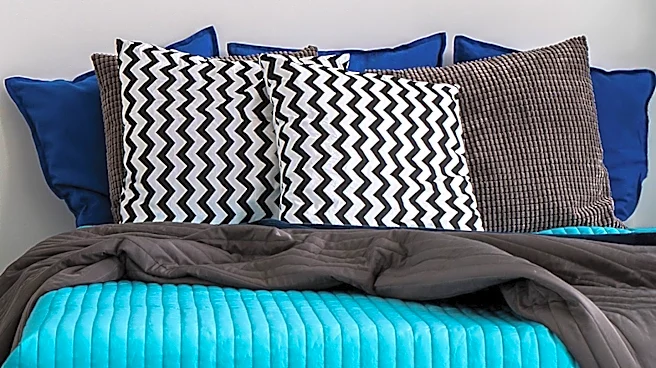
Key trends include the widespread use of peel-and-stick wallpaper, which allows students to customize their rooms within dorm guidelines. Designers like Shannan Bower and Amy Lawrence highlight the popularity of 'dopamine dorms,' characterized by bold colors and patterns, aiming to create fun and stimulating environments. Layered lighting, incorporating various soft light sources instead of harsh overhead lights, is also popular to foster a cozy atmosphere. Additionally, students are prioritizing dedicated vanity spaces, equipped with comfortable seating and well-lit mirrors, to serve as functional and aesthetically pleasing areas for getting ready.
Why It's Important?
This shift in dorm decor reflects a broader cultural emphasis on personal well-being and self-expression, even in temporary living situations. For students, creating a personalized and comfortable environment can significantly impact their mental health and academic performance, making their dorm feel more like a 'home away from home.' For businesses in the home decor and retail sectors, this trend presents a substantial market opportunity for products that are customizable, easy to install, and align with current aesthetic preferences. The demand for peel-and-stick wallpaper, for instance, drives innovation in temporary and renter-friendly decor solutions. The focus on 'dopamine dorms' and bold aesthetics also influences product development, encouraging manufacturers to offer a wider range of vibrant and patterned items. This trend underscores the growing importance of interior design in enhancing daily life, even for a demographic often associated with utilitarian living spaces.
What's Next?
The demand for personalized and expressive dorm decor is likely to continue, driving further innovation in temporary and customizable home furnishing solutions. Retailers and designers will probably expand their offerings to include more peel-and-stick options, modular furniture, and versatile lighting solutions tailored for small spaces. The emphasis on bold colors and patterns suggests a continued departure from minimalist trends in student housing, potentially influencing broader interior design aesthetics. Manufacturers may also explore more eco-friendly and easily removable materials to cater to the transient nature of dorm living. Educational institutions might also consider updating their dorm policies to accommodate these evolving decor trends, recognizing the positive impact of personalized spaces on student well-being. The market will likely see increased collaboration between decor brands and social media influencers to reach this demographic effectively.
Beyond the Headlines
The 'dopamine dorm' phenomenon extends beyond mere aesthetics, touching upon the psychological need for comfort and control in new and often challenging environments. For many students, their dorm room is their first independent living space, and the ability to personalize it becomes a crucial aspect of identity formation and emotional security. The rise of peel-and-stick wallpaper and other temporary decor solutions also highlights a generational preference for flexibility and non-committal design choices, reflecting a broader societal trend towards transient lifestyles and rental living. This trend could also have long-term implications for how future generations approach homeownership and interior design, prioritizing adaptability and personal expression over permanent fixtures. The focus on creating 'fun' and 'expressive' spaces also subtly challenges traditional notions of academic austerity, suggesting a more holistic view of student life that integrates personal comfort and aesthetic pleasure.