




What's Happening?
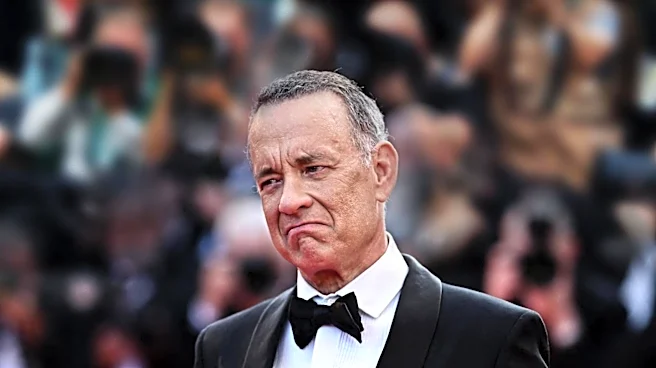
During the pre-production training for the acclaimed 2001 miniseries 'Band of Brothers,' executive producer Tom Hanks intervened to quell a rebellion among the cast members. Actor Neal McDonough, who portrayed First Lieutenant Lynn 'Buck' Compton, recounted
in an interview with Fox News Digital that the rigorous military-style training camp led to significant discontent among some actors. The training, designed to immerse the cast in the realities of a soldier's life, was so demanding that several actors began to protest the conditions. McDonough described experiencing injuries, including a chipped tooth and a broken toe, highlighting the intensity of the camp. Hanks, who was simultaneously filming 'Cast Away' and sporting a beard and long hair for that role, arrived at the training site via helicopter to address the disgruntled cast. His appearance and subsequent speech were pivotal in shifting the actors' attitudes towards their roles.
Why It's Important?
Tom Hanks' intervention was crucial in ensuring the authenticity and success of 'Band of Brothers,' a miniseries that went on to win seven Emmy Awards and is widely regarded as one of the best war miniseries ever produced. His speech reminded the cast of their responsibility to honor the real-life Easy Company soldiers and all those who fought in World War II. By emphasizing the sacrifices made for freedom, Hanks instilled a sense of purpose and dedication in the actors, transforming their resistance into commitment. This incident underscores the importance of leadership and vision in creative projects, particularly those aiming for historical accuracy and emotional depth. The cast's renewed dedication, spurred by Hanks' words, directly contributed to the miniseries' critical acclaim and lasting impact, making it a benchmark for historical dramas.
What's Next?
The legacy of 'Band of Brothers' continues to resonate, with the miniseries remaining available for streaming on HBO Max. The story of its challenging production, including Hanks' intervention, serves as an enduring anecdote in Hollywood history, often cited in discussions about method acting and historical accuracy in film and television. For the actors involved, many of whom were then-emerging talents like Michael Fassbender, James McAvoy, and Tom Hardy, the experience was formative. The miniseries' continued availability ensures that new generations can appreciate its historical significance and the dedication that went into its creation. Future productions aiming for similar levels of historical authenticity may draw lessons from the 'Band of Brothers' approach to pre-production training and cast motivation.
Beyond the Headlines
The incident reveals a deeper insight into the psychological and emotional demands placed on actors portraying real-life historical figures, especially in a war context. The 'brainwashing,' as McDonough jokingly referred to it, was a process of profound empathy and commitment, transcending mere acting to embody the spirit of the soldiers they were portraying. This approach raises questions about the ethical boundaries of immersive training and its potential psychological toll, even as it aims for artistic integrity. The success of 'Band of Brothers' suggests that such intense preparation can yield powerful and authentic performances, but it also highlights the unique pressures faced by those in the entertainment industry when tasked with representing sensitive historical narratives. The story also reflects on the power of a compelling narrative and the responsibility of storytellers to honor the past truthfully.