



What's Happening?
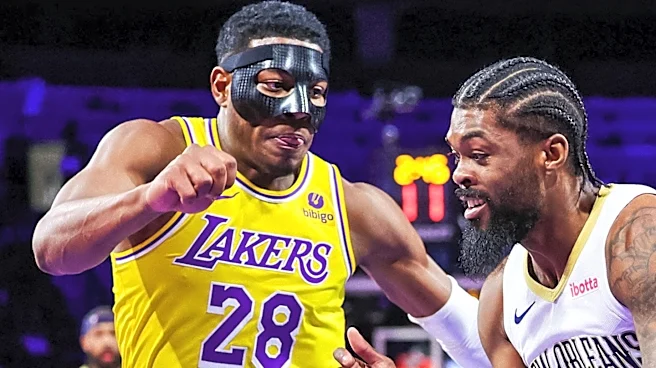
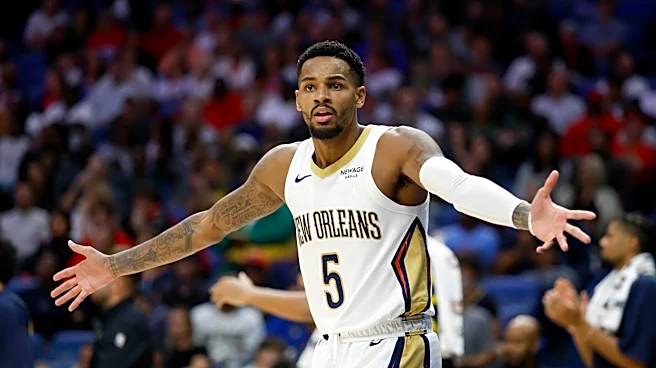
New Orleans Pelicans guard Jeremiah Fears delivered a standout performance against the Sacramento Kings, nearly achieving his first career triple-double. With Dejounte Murray absent, Fears stepped into a primary playmaking role, recording 22 points, a career-high
13 assists, eight rebounds, four blocks, and two steals in the Pelicans' 132-120 victory. He shot efficiently, making nine of 16 field goals and three of five from beyond the arc, while committing only three turnovers in 29 minutes. This performance marked New Orleans' first win after four consecutive losses and highlighted Fears' capability to direct the offense, create for teammates, score efficiently, and contribute defensively. The team's offensive output was balanced, with 32 assists on 50 made baskets and nearly 60% shooting from the floor, including 80 points in the paint.
Why It's Important?
Jeremiah Fears' performance is significant for the New Orleans Pelicans as it provides a clear demonstration of his potential as a primary playmaker, challenging the team's existing backcourt dynamics. The Pelicans have been grappling with how to balance their investment in veteran guards with the development of their young core, particularly given that multiple players require the ball to be effective. Fears' ability to manage a larger offensive role without sacrificing his own scoring or becoming careless with the basketball offers a new perspective on how the team can optimize its roster. This could lead to a strategic shift in how the Pelicans utilize their young talent, potentially unlocking a more consistent and balanced offensive identity that they have struggled to achieve. His impact on both ends of the court, including defensive contributions, further strengthens his case for an expanded role.
What's Next?
The Pelicans now face the question of how to integrate Jeremiah Fears' demonstrated capabilities into their regular rotation, especially upon Dejounte Murray's return. While one game against a winless opponent may not fully resolve the team's backcourt questions, Fears' performance raises the critical inquiry of how much his development hinges on consistent responsibility as a primary playmaker. The team will need to explore how to consistently put him in positions to make the decisions that led to his career night. This could involve adjusting playmaking responsibilities, altering rotations, or even re-evaluating the long-term roles of other guards. The Pelicans' ability to find the right balance between nurturing Fears' potential and leveraging their veteran talent will be crucial for their ongoing season and future success.
Beyond the Headlines
Jeremiah Fears' breakout game transcends mere statistics, offering a deeper insight into the challenges NBA teams face in developing young talent within a competitive roster. It highlights the delicate balance between immediate team performance and long-term player growth. For young players like Fears, opportunities to lead the offense, even in the absence of key players, can be pivotal in showcasing their full potential and demanding a larger role. This situation also underscores the strategic dilemma for front offices: how to foster individual player development while maintaining team cohesion and achieving win-now objectives. The Pelicans' response to Fears' performance could set a precedent for how they manage their young assets, potentially influencing future draft strategies and player acquisitions, and shaping the team's identity for years to come.