





What's Happening?
German manufacturing activity increased to 54.1 points in August, surpassing the expected 52.0, according to preliminary HCOB surveys cited by The Rio Times. This marks the fastest growth in production, new orders, and export sales for German industry
since early 2022. The recovery is attributed to a rebound from a weak second quarter, a surge in defense spending, and inventory buildup driven by prolonged supply disruptions. Additionally, rising demand for artificial intelligence-related equipment is contributing to the industrial growth. In contrast, the services sector experienced a decline in activity, falling to 48.5 points, though companies in this sector reported continued growth in new business and employment. The eurozone's composite business activity index also saw an increase, reaching a nine-month high of 52.1 points in August.
Why It's Important?
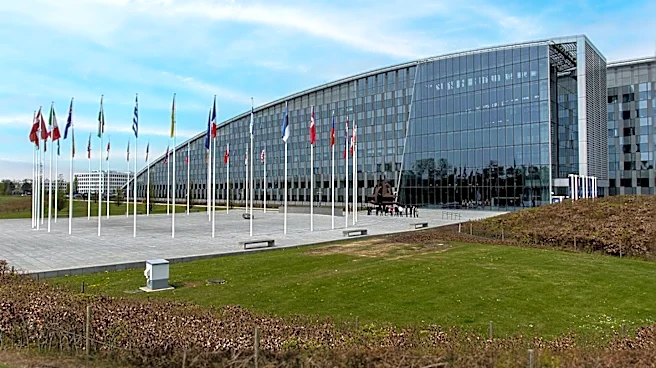
While primarily focused on Germany, this development has indirect implications for the U.S. economy and global supply chains. Increased defense spending in Germany, a key NATO ally, could lead to greater demand for military equipment and technology, potentially benefiting U.S. defense contractors and contributing to transatlantic defense cooperation. The rising demand for AI-related equipment in Germany also reflects a global trend, which could further strain supply chains for critical electronic components, as seen with the current shortages affecting the automotive industry. This could impact U.S. tech companies and manufacturers that rely on these components. Furthermore, a stronger German manufacturing sector, particularly in high-tech areas, could increase competition for U.S. industries in global markets. The inventory buildup due to past supply disruptions highlights the ongoing fragility of global logistics, a concern for U.S. businesses that depend on international trade.
What's Next?
The continued growth in German manufacturing, fueled by defense contracts and AI demand, suggests a sustained period of industrial activity. This could lead to further investment in manufacturing capabilities and technological advancements within Germany. The European Central Bank's upcoming meeting in September will be closely watched for any policy adjustments in response to these economic trends. For the U.S., this situation might prompt a re-evaluation of its own defense industrial base and its capacity to meet potential increased demand from allies. It could also accelerate efforts to secure supply chains for AI-related components, potentially through international partnerships or domestic production incentives. The divergence between manufacturing and services sector performance in Germany will also be a key indicator for broader European economic health, influencing U.S. trade and investment strategies in the region.
Beyond the Headlines
The German manufacturing surge, driven by defense spending and AI, points to a significant reorientation of industrial priorities in response to geopolitical shifts and technological advancements. The 'inventory buildup due to prolonged supply disruptions' indicates a strategic move by companies to enhance resilience against future shocks, a lesson learned from recent global crises. This could lead to a more localized or diversified approach to manufacturing, potentially impacting global trade patterns. The dual drivers of defense and AI also highlight the increasing convergence of national security and technological leadership. This trend could reshape international alliances and competition, with countries prioritizing access to critical technologies and manufacturing capabilities. The focus on AI-related equipment suggests a broader industrial transformation, where traditional manufacturing is increasingly integrated with advanced digital technologies, creating new opportunities and challenges for the global economy.