








What's Happening?
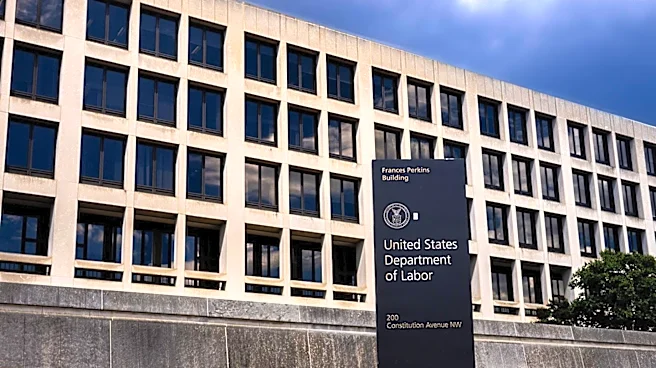
The Department of Labor (DOL) has submitted its proposed investment safe harbor rule for 401(k) plans to the White House Office of Management and Budget (OMB) for final review on November 5. This rule aims to provide fiduciaries of Employee Retirement
Income Security Act (ERISA) plans with clearer criteria for evaluating and selecting alternative investments within defined contribution plans. The proposal follows an executive order issued by President Trump in August 2025, which directed federal regulators to encourage private investments in such retirement plans. The DOL publicly released the proposed rule in March, and a 60-day public comment period concluded in June. The final text of the rule and its approval by the OMB are still pending. This development is part of a broader effort to potentially expand investment options for 401(k) participants.
Why It's Important?
This rule is significant because it could fundamentally alter how retirement plan fiduciaries approach investment strategies for 401(k)s. By providing concrete fiduciary criteria for alternative investments, the DOL aims to encourage greater allocation to private assets, which President Trump's executive order sought to promote. This could lead to a wider array of investment options for millions of American workers saving for retirement, potentially offering different risk-reward profiles than traditional public market investments. However, it also raises questions about the suitability and oversight of such investments for individual retirement savers. Critics, such as Senator Elizabeth Warren, have expressed concerns about the risks associated with private assets in retirement plans. The rule's final form will determine the extent to which plan sponsors can incorporate these alternative investments and the level of protection afforded to participants.
What's Next?
The next step involves the OMB's final review and approval of the rule. Once approved, the final text will be released, detailing the specific criteria and guidelines for fiduciaries regarding alternative investments in 401(k) plans. Following finalization, plan fiduciaries will need to assess how to integrate these new guidelines into their investment selection processes. This could lead to changes in the investment lineups offered to 401(k) participants, potentially introducing new private equity, real estate, or other alternative asset classes. Workplace retirement savers should monitor these developments closely, as the rule's implementation could impact their available investment choices and the overall risk and return characteristics of their retirement portfolios. The House Committee on Rules is also considering related legislation, the Retirement Fairness for Charities and Educational Institutions Act of 2025, which could further expand investment options for 403(b) plans.
Beyond the Headlines
The push to include alternative investments in 401(k) plans reflects a broader debate about access to sophisticated investment strategies for retail investors and the role of private capital in long-term savings. Proponents argue that alternative investments can offer diversification and potentially higher returns, especially in a low-interest-rate environment. However, these investments often come with higher fees, less liquidity, and greater complexity, which could pose challenges for average retirement savers. The rule's implementation will test the balance between expanding investment opportunities and safeguarding retirement savings. It also highlights the ongoing influence of presidential executive orders on regulatory policy and the potential for significant shifts in financial markets based on administrative priorities. The long-term impact on retirement security and the financial industry will depend on how fiduciaries and participants adapt to these new investment landscapes.