

What's Happening?
The Washington Nationals are reportedly not planning significant outside spending to improve their roster this offseason, despite having the lowest projected payroll in Major League Baseball and an 11-win improvement in the 2026 season. This comes as a disappointment
to fans, especially since a substantial amount of Stephen Strasburg's contract money is coming off the books, which would free up financial resources. The team's offense was considered elite in 2026, yet ownership appears reluctant to invest in addressing obvious pitching staff deficiencies. Early reports suggest a continuation of previous offseasons' strategy of seeking low-cost value rather than pursuing higher-tier free agents. This approach contrasts sharply with the franchise's past willingness to sign high-value contracts, such as those for Max Scherzer and Jayson Werth, under previous ownership.
Why It's Important?
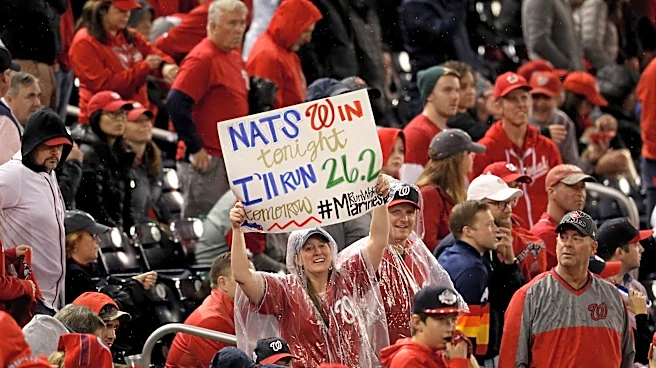
This financial conservatism by the Washington Nationals' ownership has significant implications for the team's competitiveness and fan engagement. In a tough division, a lack of investment makes it challenging for the Nationals to contend, potentially leading to prolonged periods of mediocrity. For fans, this signals a continued frustration with ownership's apparent disinterest in building a winning team, especially after the 2019 World Series victory. The strategy of 'dumpster diving' for value and trading players at the deadline, rather than investing in long-term roster improvements, could erode the fanbase and impact ticket sales and merchandise revenue. It also suggests a broader trend where some MLB franchises prioritize financial efficiency over on-field success, which can affect the overall competitive balance of the league.
What's Next?
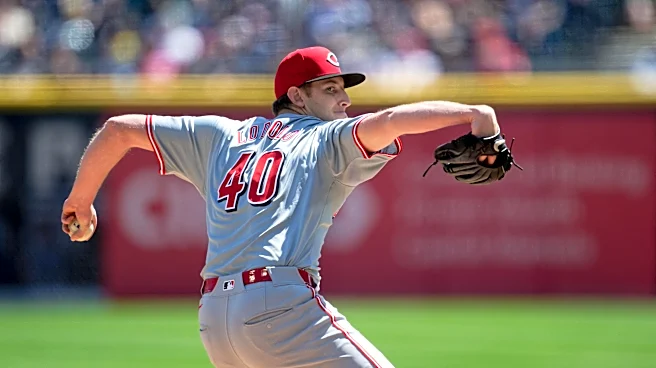
As the offseason progresses, the Nationals are expected to continue their strategy of targeting lower-cost pitching options, with names like Kris Bubic, Brady Singer, and Kona Takahashi being mentioned. The team's reluctance to engage in significant spending or even trade prospects for pitching talent suggests that fans should not anticipate major roster overhauls. This approach will likely mean the team will rely heavily on internal development and hope for unexpected breakouts from less expensive acquisitions. The focus will be on whether the current roster, which showed promise in 2026, can sustain its performance without substantial external additions, particularly in the pitching department. Fan reaction and attendance figures in the upcoming season will be key indicators of the long-term impact of this financial strategy.
Beyond the Headlines
The Nationals' current financial strategy raises questions about the evolving landscape of MLB ownership and team building. The shift from aggressive spending under previous ownership to the current conservative approach highlights a potential change in organizational philosophy, possibly prioritizing profitability and long-term financial stability over immediate competitive aspirations. This could reflect broader economic pressures or a different vision for franchise management. The frustration expressed by fans underscores the tension between a team's business objectives and the community's desire for a winning product. This situation could also influence player perceptions of the organization, potentially making it less attractive for top-tier free agents in the future, further complicating efforts to build a championship-caliber team.