







What's Happening?
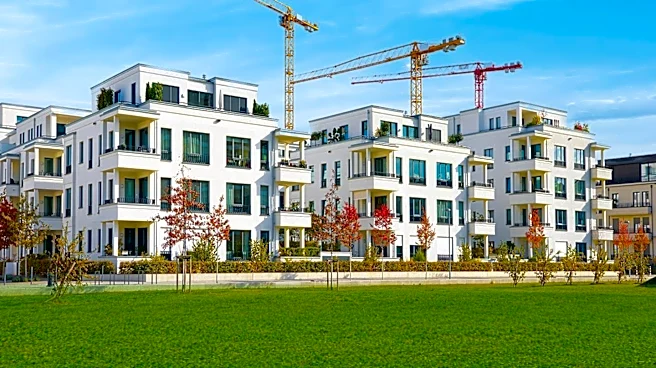
D.R. Horton, Inc., identified as the largest homebuilder in the U.S. and publicly traded on the New York Stock Exchange since its founding in 1978, is expanding its presence in Indiana. The company has introduced Baker's Pointe in Pendleton, Indiana,
a new community offering a variety of home designs. These include both ranch-style and two-story floor plans, catering to diverse buyer preferences. The community is designed with several amenities for residents, such as a playground, walking paths, and pickleball courts. Its location is strategically chosen to be near local educational institutions, including Pendleton Elementary, Pendleton Heights Middle School, and Pendleton Heights High School. Model homes at Baker's Pointe are available for viewing throughout the week, with specific hours from Sunday to Monday (12:00 PM to 6:00 PM) and Tuesday to Saturday (11:00 AM to 6:00 PM). This development signifies D.R. Horton's continued investment in the U.S. housing market, particularly in growing suburban areas.
Why It's Important?
The expansion of D.R. Horton, a leading U.S. homebuilder, into new communities like Baker's Pointe in Pendleton, Indiana, holds significant implications for the national housing market and local economies. As the largest homebuilder, D.R. Horton's activities often reflect broader trends in housing demand and construction. This new development indicates a continued demand for housing in suburban areas, potentially driven by factors such as affordability, access to good schools, and community amenities. For the local economy in Pendleton, this project will likely generate jobs in construction, real estate, and related services. It also increases the housing stock, which can help address supply shortages and potentially stabilize housing prices in the region. The inclusion of amenities like pickleball courts and walking paths suggests a focus on lifestyle and community, which can attract new residents and contribute to the area's growth. Homebuyers stand to gain from new housing options, while local businesses may benefit from an influx of new residents.
What's Next?
Following the opening of model homes, D.R. Horton will likely focus on marketing and sales efforts for Baker's Pointe. The company will aim to attract potential buyers, facilitate home sales, and continue the construction of additional units within the community. The success of this development could influence D.R. Horton's future investment decisions in other similar markets across the U.S. Local authorities will monitor the community's development, ensuring compliance with zoning and building regulations, and potentially planning for increased demand for public services such as schools and infrastructure. The ongoing sales performance at Baker's Pointe will serve as an indicator of the health of the housing market in the greater Indianapolis area and potentially for similar suburban markets nationwide. Future phases of development, if planned, would depend on the initial uptake and market conditions.
Beyond the Headlines
The development of communities like Baker's Pointe by major homebuilders such as D.R. Horton highlights a broader societal trend towards suburban living, often influenced by factors like remote work opportunities and the search for more space and community amenities. This trend can lead to demographic shifts, impacting the growth and character of smaller towns and suburban areas. The emphasis on amenities like pickleball courts reflects evolving consumer preferences for active lifestyles and community engagement within residential developments. From an environmental perspective, new construction projects raise questions about land use, resource consumption, and the impact on local ecosystems, necessitating careful planning and sustainable practices. Furthermore, the availability of diverse floor plans, including ranch-style and two-story homes, caters to different life stages and family structures, underscoring the evolving needs of the American homeowner. The proximity to schools also points to the continued importance of educational access as a key driver for housing decisions.